Reflections on Recovery – approaching five years

This year will mark my fifth year in recovery. I would say I have definitely encountered my psychic shift. It has all been by God’s grace, paired with a willingness to look in the mirror, talk honestly about the inside of my brain, and accept that I was never meant to do this alone.

What has changed recently? If I’m completely honest, my focus has shifted from recovery from to recovery to. I’ve used that phrase for the last couple of years because I knew I needed to move forward into life, shaped by this new way of seeing the world and my relationship to it.

I remain, in many ways, a walking paradox. I am many things at once. I am grateful and feel pangs of remorse on any given day. I wouldn’t change a thing, yet I would give anything for a do-over. These statements sound like they can’t exist in the same space at the same time, but who ever said the very being of a man is bound by the laws of physics?

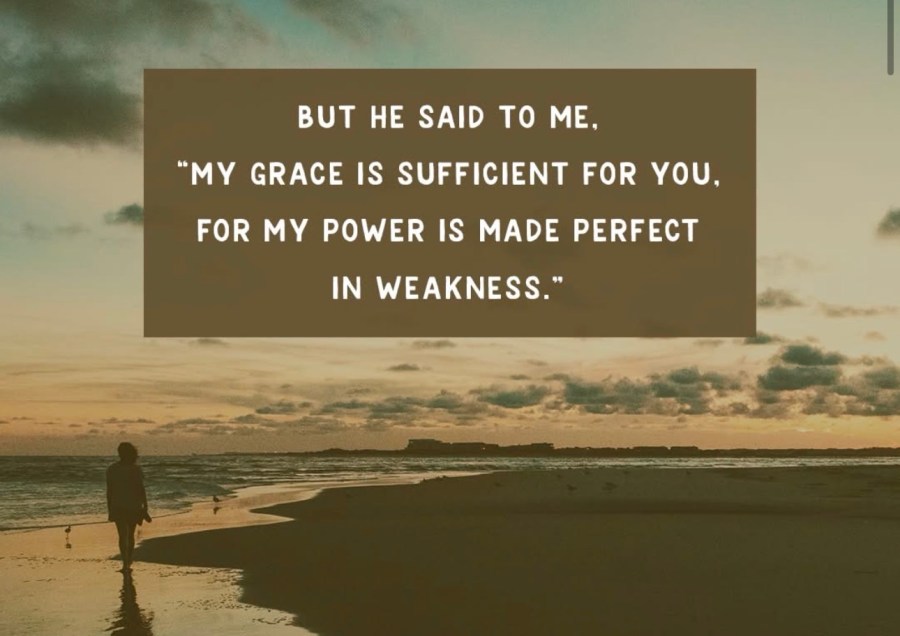
The mantra of my recovery fellowship is from shame to grace. Many would read that as a point A to point B journey, and I suppose that’s partly true. What that view often misses is that we continue to need grace, and we continue to take inventory. In the Twelve Steps, the inventory begun in Steps 4 and 5 continues in Step 10. This is ongoing.

Every day in recovery is a spectrum of relapse into the illusion of independence. I may not fall back into my darkest hole, but each 24-hour period is still full of cocktails of fear, resentment, gratitude, peace, joy, and regret. I am a tapestry of what the programme calls assets and defects of character.
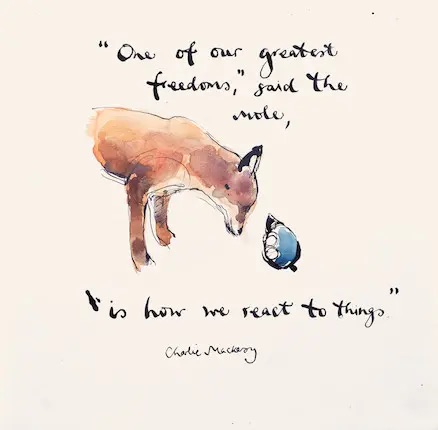
In The Boy, the Mole, the Fox and the Horse, the mole says to the boy that one of our greatest freedoms is how we react to things. Every day presents that opportunity to live in freedom. Until I accept that the only thing I can truly count on in this world is the grace of God, my inventory becomes that of a score-keeping Pharisee of self. With grace, it becomes a head-up, self-aware posture that recognises how a word, a look, or a deed affects others.

One of my biggest life skills is the ability to own my own shit before others do. I am still a smiling and loving pile of contrition. Honestly, the day I cease to be so is probably the day I fall back into my old delusions.

If my addiction is wedded to my illusory self, then I see it existing in much the same way Lord Voldemort endured throughout the Harry Potter films. My cycles of addiction split my soul into pieces, hidden away like horcruxes. For me, food, social media, tech doomscrolling, procrastination, and even permitted sexual behaviours can become places where my character defects feel nostalgic for the past.

Here’s a concrete example. Masturbation with the boundary of no porn or unfaithful fantasy is a permitted behaviour for me, yet I often need reining in. The muscle memory to ritualise it is deeply ingrained. With food, I can eat badly, gain weight, and quietly undo the wins of a life lived in recovery. My running, cold plunges, and hunger for outdoor adventure give way to eating at stupid times, buying larger clothes, and chewing Andrew’s antacids like they were named after me.

This week’s contradiction is this: I have desire and lust for my own partner. Instead of stepping out and initiating intimacy, I retreat into fantasy. I end up in another room, jacking off to imagination and euphoric recall of being with the woman I love. There’s something profoundly sad and lonely in admitting that I have all I need, yet still opt for a counterfeit sense of relief. I don’t feel overwhelming shame about it, but it continues to fuel a deep sadness.

When it comes to intimacy, I express love, affection, and longing. Yet years of feeling inadequate and fearing rejection pull me back into nostalgic fantasy, rather than the beautiful, participatory chaos of real connection. Call it what I want, but I’m living in the past, flicking through the “porn magazine” of my own biography.

Even here, there is gratitude. I long for her. I can honestly say I’ve never been so tethered in desire, love and fantasy to my own partner.

So what’s my feedback to myself? My recovery logic differs from that of an alcoholic, where sobriety is black and white: consume or abstain. That binary works for substance addiction. With process addictions, the reasoning is different. Food addicts still need to eat. Gamblers don’t need to gamble. Sex addicts don’t need to be celibate. The issue is discernment.

In SAA, we define our own abstinence. It isn’t fixed in stone, but it must be rooted in honesty. To thine own self be true.

This is why others remain essential to my recovery. I can’t afford to confuse privacy with secrecy the way I once did. Today, my self-reading tells me I am more emotionally open, reflective, and gracious. Yet I am still intimacy-avoidant, and I can’t change that alone or heal in a vacuum.

So nearly five years in recovery? It’s still one day at a time and my recovery is best done less about me and more about we.

This is where we talk , set another boundary and continue to take one day at a time.

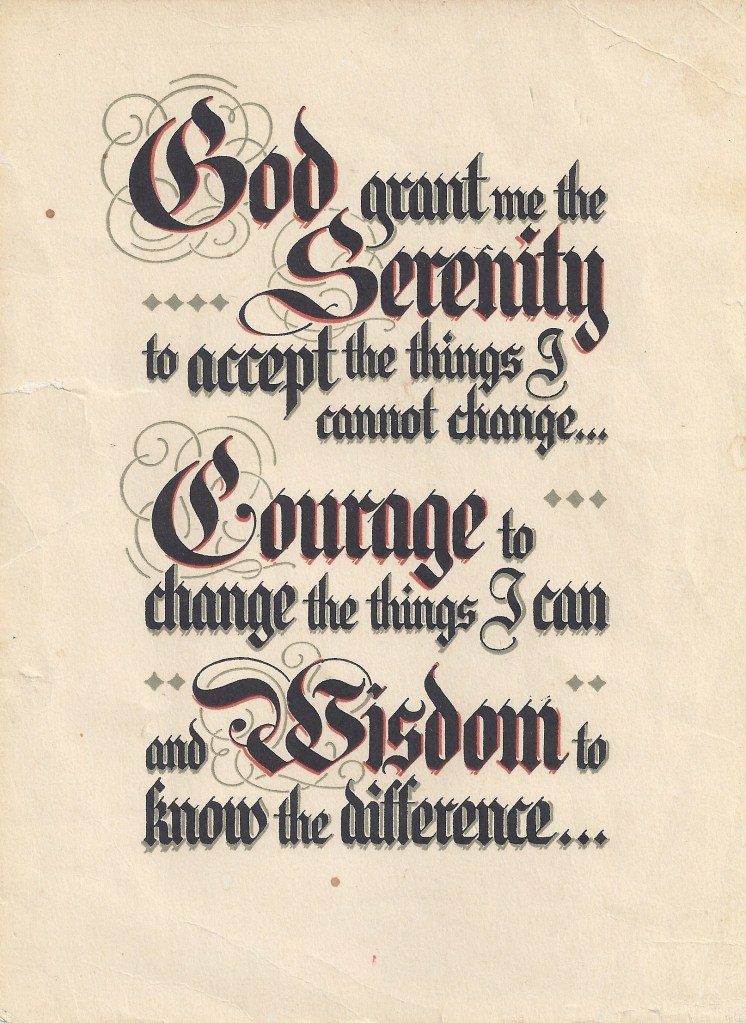
God, give me the serenity. Grace always grace!

Sunset

Finding some balance

Do not pray for an easy life, pray for the strength to endure a difficult one.

Bruce Lee

This post is a reflection on the journey of finding balance. For many of us the twelve-step program serves as a “sufficient substitute” for our addiction and it makes sense, as the regimen of life in recovery demands new patterns and processes, gradually shaping new pathways in thinking and acting.

At times, I’ve been guilty of religiously dedicating myself to service. While service has kept me relatively sane, sober, and in a much healthier place in life, I’ve made mistakes in judgment and decisions. I’m grateful to now recognise these errors.

For instance, insisting on attending a meeting on our anniversary wasn’t wrong in itself, but my bullish attitude in refusing to take a day off was. While some might view this dedication as commendable in recovery circles, I realised it left my loving partner feeling let down.

I’ve also allowed my program to dominate conversations countless times and I struggled with managing my time better, often being late or absent from life due to taking and making calls. Don’t misunderstand me here, these aren’t necessarily negative things but rather manifestations of my incapacity to empathize with loved ones and see things from anothers’ perspective.

Approaching three years on this journey, I’m filled with gratitude for the growth, accountability, and newfound love for life. From shame to grace, from seeing suicide as a sensible option to cherishing life and my fellow man, it’s been a transformative experience.

My addiction had been futile attempts to find and maintain balance on my own terms, resulting in a constant struggle and a paradoxical existence filled with pain, “just the once was too much and never enough for me”

The balance I seek now is one I receive and rest in, rather than striving for with sheer stubbornness. I’ve been reflecting on how God doesn’t promise us happiness or an easy life but rather the strength to endure a difficult one. While happiness may elude us, peace is far more important.

This year, my personal goals revolve around being kinder to myself and taking better care of my well-being to continue being of use to others. This includes participating in marathon and ultra events, as running brings discipline and solitude without isolation. Additionally, I plan to reconnect with music, whether playing at open mics or ministering through song, as it’s an integral part of who I am.

I also aim to grow my business, embrace the future with my beloved, and continue to make amends to those I’ve hurt, especially my family and myself.

Here’s to staying present while recognising that my program of living, supported by a loving God, is the foundation holding my life together, rather than my ego’s attempt to cosplay God and “conduct the orchestra”

Triggers

Making the world smaller

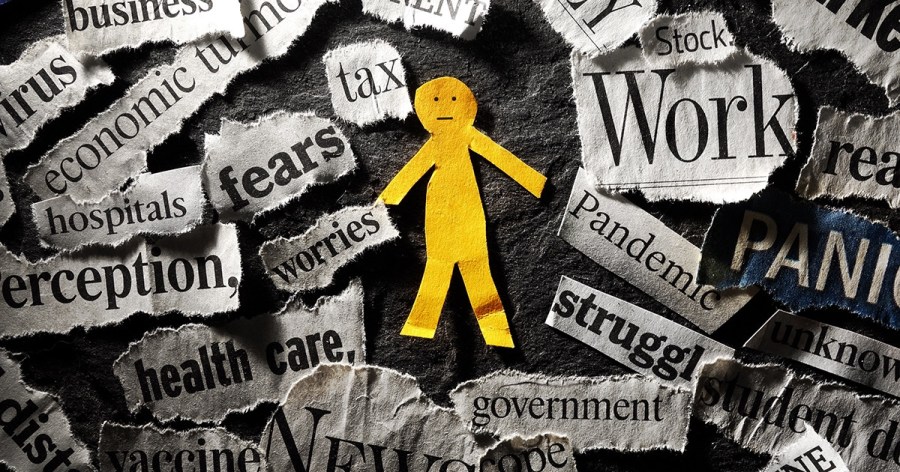
In a world that is full of issues which cause worry and often draw a line in the sand and beckon people to take a stance, I see more that divides than unites us at present. Whether it’s Ukraine and Russia or more recently the State of Israel and the displaced Palestinians, whenever there is a flag to wave and a side to pick, we find the most dangerous of human behaviors at play. But it’s not just about geopolitics or warfare.

Objectifying and dehumanising are alive and well in many ways among us. For all our modern-day virtue, we see people are easily othered, described, and treated as objects, devalued for their humanity. Empathy is displayed with profile picture banners and solidarity with buying a particular product or taking part in a social media trend.


I speak on this as one with life experience. The apostle Paul referred to himself as the “chief of sinners.” As he wrote to others knowing full well his own past behaviours.

This post isn’t some rant of a hypocrite or someone trying to compare themselves to an apostle, nor is it about the state of the world but the observations of a flawed man. I am a cautionary tale in the perils of sexual objectification and ultimately the dehumanizing that grew out of unchecked thinking.

I have to check myself when I participate in othering and that often means dipping out of political discourse, not joining in with people gossiping about or judging others, such situations are a breeding ground for my character defects. I have to conduct myself through the mirror as it shows me the only person I need to try to steer.

I hope that we as a people wake up to the slumber that modernity has lulled us into and see how easy it is to judge and devalue others, I was asked once how I was able to look at sexual content with such a lack of care for the humans on the screen. All I could say was that I believed I had seen so much that I had dissociated what I would see on a screen from real life.

I make reflective observations about myself more than others now, but I have had to make it a smaller place to live as I often see peoples pain a lot easier than before, Empathy was always suppressed for me when I used porn to shut down negative emotions.

In recovery I experience the full spectrum of emotions, it’s both the best and worst thing about being sexually sober.


The feelings now at play are like the overwhelming senses from a clip I reflect on from “The Man of Steel.” The young Clark’s senses were in overdrive that it was too much pressure; it was consuming. His mother’s answer was to make the world a little smaller and just focus on her voice.

If I focus on the issues of the world around us, I try not to take sides and instead try to see the humans in the headlines. Be that the latest celebrity pile-on or the next political issue that many pick sides on. My role is only to make better choices in my own life, not to control anyone but take accountability for my own actions.

Most sources of worry about the world can be filtered through the serenity prayer.

I pray too that I don’t slide down the slope of objectification, as I never want to fall off that cliff again.

Healed at the pool

“You only need me” – it’s a step 11 thing

Lately, I’ve become locked in the orbit of my faith, The 12 steps of Sex Addicts Anonymous have been instrumental in bringing me full circle. What I truly appreciate about this program is that it doesn’t impose a particular belief system or agenda on its members. It’s all about personal growth and healing, no strings attached.

In the past, I might have been guilty of dogmatic arrogance with my faith. But today, I’ve come to realise that I’ve been granted forgiveness and a fresh start. What truly matters is not the dogmatic preaching of one’s interpretations but joy knowing what revolutionary change these stories can mean to us if we keep an open mind.

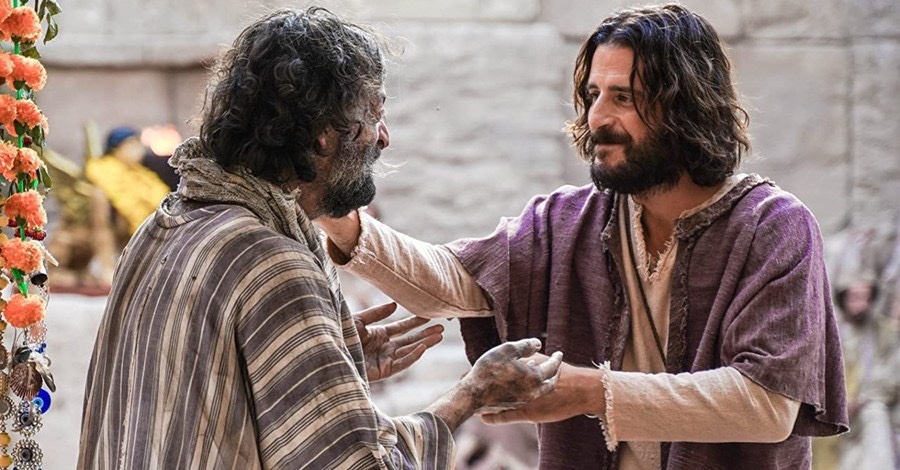
Tonight, I’m inspired to write about just one story that hit me like a lightning bolt. I’ve been engrossed in the streaming series “The Chosen.” It’s the first Christian-produced show that’s captured my attention with its quality and a fresh perspective on stories I’ve known since my youth.

The story that caught my attention centers around a paralytic man who spent over two decades waiting by a pagan pool, hoping for healing from its waters. Then, God arrives.

Like the cripple at the pool I made my bed and hoped my pain would go away. You see, in the past, my addiction was my god. Sex and porn were my acts of worship. I was devout and faithful to those rituals, and those rituals led me to my darkest places. But you know what? Rituals are powerful, and they can lead us out of the darkness too.


In recovery, we learn to walk again, we replace old destructive rituals with healthier ones. We find the God of our understanding, ready and willing to work with us as we carve out a new path. As we make progress, we begin to understand that we’re spiritual beings, and we realise that our old ways were an attempt to fix spiritual wounds with corrupted and counterfeit solutions.

Now, my desire is simple: to continue healing from the pain of the past, to embrace more intimacy in my relationship based on authenticity, and to live a life filled with love and service to others, to experience rather than just exist.


I’ve recently travelled through moments I would have begged God to spare me from, moments of great shame but I’ve discovered that the most profound lessons come from those experiences, no matter how painful or shameful they may feel I am connected with my future and potential through grace.

In my service work with fellow addicts, I’ve learned the importance of sharing my faith but not imposing it. It doesn’t matter how someone finds their path to a higher power and lasting change; it could be the group, the program, or something else entirely. The important thing is the transformation. I have no qualms with God sitting back and not craving credit for changing lives. God to me sometimes hides his signature on his masterpieces.

The beauty lies in the journey, in the transformation, and in the newfound faith that carries us forward from shame to grace.

Service and amends – Steps Nine & Ten in action

After an online home group meeting and a tough day, like many other days over the last few years. My partner and I, are watching Elementary. Johnny Lee Miller’s portrayal of Sherlock Holmes in recovery from addiction has given me many 12-step moments of reflection.

Tonight’s rewatch of an episode focuses on Sherlock’s guilt over his character defects leading to a friend getting hurt who no longer wanted to be around him. His sponsor, Alfredo, suggested that his work in the program had opened him up to empathy, and it was time to give back.


Service has been crucial to my progress. From putting out chairs to organizing new meetings, laying down my selfish rituals of the past, and embracing service to others has set me on a path toward pursuing a better way.

Tonight, like every other night, the meeting and the program have been there for me. Initially, it offered me a space where I realised I wasn’t alone or as unique as I thought. In that place, I felt safe to start making friends based on owning my past and, from there, to finally open up and deal with the past that drove my addiction for so long.

This recovery journey has reminded me that recovery is for the long haul, and it isn’t just something I do to clean the outside of the cup. I have a purpose, and I love this recovery stuff.

I am working my 9th Step, making direct amends where possible. Some I have to have a face to face discussion with about my actions and ask for their forgiveness, there are others that I cannot make amends to, for example, I cannot make amends to nameless faces on screens but I can live an amends as there is no proof like that of a changed person.

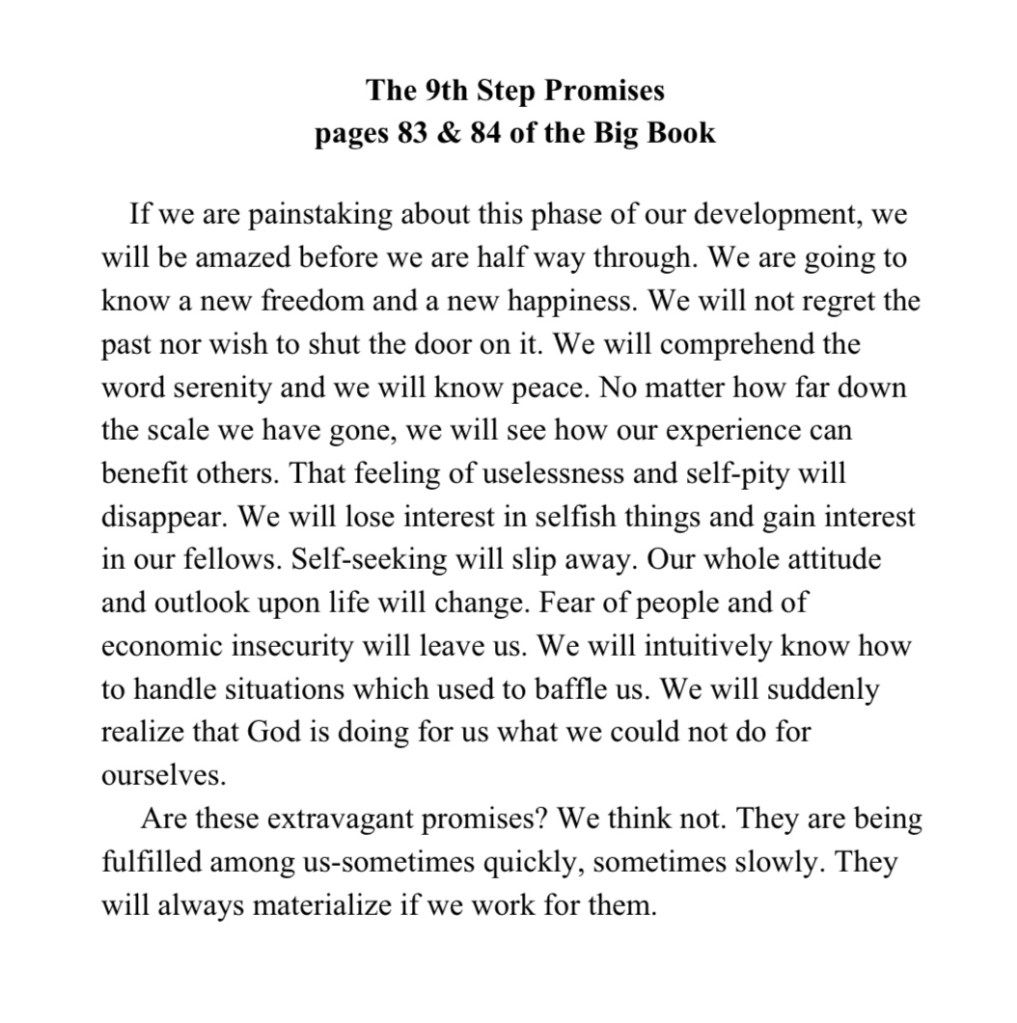
The fruit of working the program is evident in one’s life, as I have experienced. We turn to the big book to see what’s on offer for those who diligently work the steps.

Here’s the 9th Step promises that fire me up!

Today was a difficult day, but I choose to see out this day with immense gratitude.

I am a blessed man.

God, continue to grant me the serenity.


As I close the day I want to get better at being consistent with my 10th Step night time inventory.

Here’s a useful little Free 10th Step App

Offensive forgiveness

I would like to share with you two simple truths: there is nothing that cannot be forgiven, and there is no one un-deserving of forgiveness.

Desmond Tutu

During difficult times, my faith has been present as an option to choose life and hope over the option of misery and personal defects like self-pity, bitterness, resentment, and lack of forgiveness. The comfort people find in woe is tragic. (Ironically, that’s coming from an addict.)

I think we all like the idea of forgiveness, but the Instagram vs. reality factor of true forgiveness is rarely explored. The radical concept of forgiveness in the Jesus story is still massively offensive even to believers, with some only paying lip service to it and lacking the courage to practice it.


I come from an alternative stream of Christianity. Before I realised the problem I had with my sexual behaviours, pornography, and the relationship dysfunction at play in all my adult life, I was a fringe figure in church. I had a couple of stints in the Christian space, played and sang the songs, but denied God with my lifestyle.

When I think of all the headaches religion has given me, I believe most of the issues have been with the human defects of other believers. If, as they say, hurt people hurt people, then the communities of organized religion are no exception to this rule.

When I think of the wonderful things about my faith as a Christian, the strongest by far is this message of forgiveness and how when we unpack the meaning of this, it really shows that mercy and compassion will always win over a sense of justice based on anger.

Forgiveness has become a subject that can be studied at a higher academic level but is almost flaky and selective on a societal one.


My Step Four inventory comprised of things I’m embarrassed about, deeply ashamed of and abhorrently disgusted by. My sponsor was the witness of this inventory, and in all honesty, were people to be privy to a fraction of this, I would be sneered at and likely written off by a chunk of people.

I need to forgive and to be forgiven; it’s that fundamental human reality that we all need to embrace. Forgiveness is not about condoning or excusing the wrongdoing; instead, it’s about freeing ourselves from the emotional burden that can weigh us down.

To use a life example, I can refer to my birth father; he was a bully. My earliest memories of domestic violence are traumas that shaped and haunted me through my formative years and have left me with a lot of issues. In order for me to heal and move on with life, I need to forgive him for those things. By holding on to resentment, the only one being held back is me.

I simply say that, despite the hurt and the damage, I am no fit person to judge the man for his worst actions. In my heart of hearts, I do forgive him. I know what it means to need and desire forgiveness. I have to look people in the eye and own my past on a daily basis; their forgiveness doesn’t lessen my punishment.

I’ve heard the words, ‘You are an absolute idiot, but you’re a good man. I’m going to stand by you because anyone can mess up in a royal way, but I can see how much you punish yourself, so you don’t need help with that.’

This acceptance doesn’t let me off the hook; it means I am accountable to do and be better. It permits me to keep moving forward and work on my issues in a productive way.


Imagine if we strived to be slow to anger and quick to forgive; what lives might be spared, turned around, and what healing would we see?

Steps six & seven | Ready & Willing

The sixth and seventh steps are often referred to as the forgotten steps. Oddly enough, I realised I hadn’t written about them; they were a while back now.

After the heavy inventory work of steps 4 and 5, we are faced with all the defects we stared down in our sixth step.

As I cast my mind back to my step 4 inventory, the emerging list of character defects painted a picture of how deeply flawed I was. If that wasn’t enough, I now had to jot them all down and start to think about what those defects of character could become if they could be converted to assets or what behaviours could replace them.

Assuming you’ve made it through the steps to this point, you have seen the emergence of a power greater than yourself at work in your day-to-day life; the God of our understanding has a recognizable signature.

My defects are flaws such as arrogance, dishonesty, selfishness, impulsiveness, stubbornness, lack of empathy, anger issues, and jealousy, among others. These defects were both products of my acting out and drivers; they are at the heart of my entire list of sexual misconduct, fears, and resentments.

My selfishness enabled years of objectification of females, which ultimately led to dehumanization, which eventually led to my chasing the dragon of content down the rabbit hole. It was no longer even about gratification but entirely in the brain, as neurological processes were triggered by harder and harder material. And that’s just the obvious surface-level destruction at play because of unchecked defects.

If every action has an opposing reaction, then this is its opposite. In recovery, I serve others instead of myself; this is the reversal of the above. It’s the return to empathy, the rehumanizing process, and it leads to caring about others more than oneself and desiring to be of use. The reward here isn’t some dopamine overdose but healing for the remorse and guilt experienced by one’s own actions.

When we put the work into this step, it isn’t just about being informed and making some resolution. Rather, we remember that we never truly depart from step one’s admission of our inability to handle these behaviours alone; we have to have a faith-based response to what is ultimately a spiritual problem.

In my steps 6 and 7, my willingness to hand things over became the way out of cycles of behaviour that have stunted me my whole life. That willingness is a choice, but it’s one that has to become muscle memory. The reason we carry on with inventory in step 10 and maintain a spiritual connection in step 11 is because we need to keep that state of being ready and willing. “I call this process living on my knees”; it’s that throwing the towel in a state of surrender.

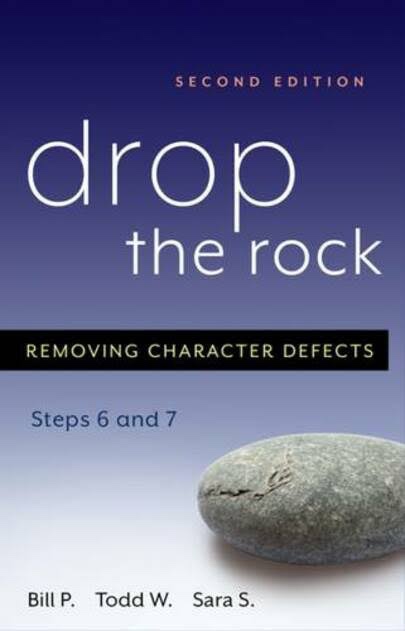
If you are working on steps 6 & 7, it’s often easy to pass them by without lingering on the lesson. The short book staple of steps 6 & 7 is “Drop the Rock.”

I keep coming back to a band in my spiritual reflections called United Pursuit, which has a song about reform, and its chorus resonates with me deeply.

“We’ve got to be willing to change, we’ve got to be willing to grow, we’ve got to be open to love in the places we didn’t expect to go.”

United Pursuit

And Breathe

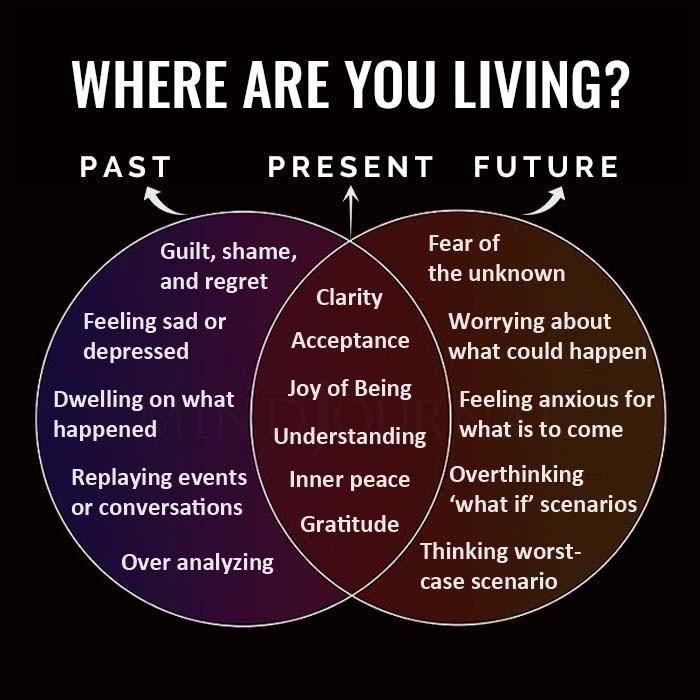
When we hit life’s bumps in the road or those shatter point moments in life, it is vital to pause and breathe. Our reaction says a lot about our ability to deal with stress, and that’s a crucial test in recovery. There are resentments and spot-check moments, and then there are the blunt force trauma moments that can shake your inmost being if you don’t have tools.

In the past, the closest I used to come to pausing and breathing was going outside for a cigarette or ten. I quit years ago, but I wonder if what I miss most about those moments was the standing still, remaining silent, and just regulating breathing. It sounds serene when you leave out the smoking part.

Whether it’s a test result, an accident, or any one of thousands of things that sends your flight senses through the roof, how can we prevent a derailment?

People in the military operating in high adrenaline speak of the short, sharp breaths to focus the senses and give time for training to kick in, to hack the response of emotion or survival.

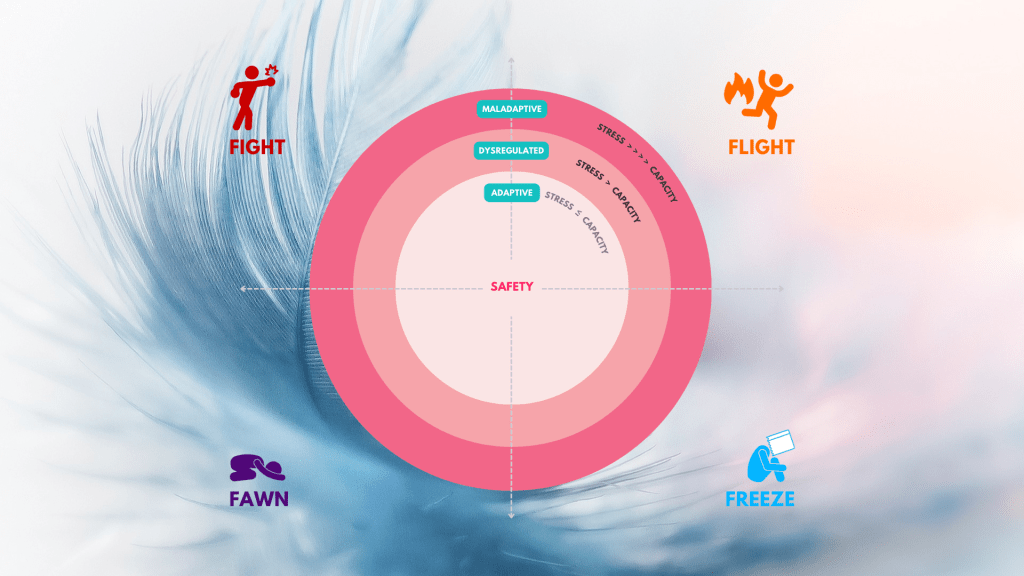
Such a moment hit me today, and for a minute or two, I was stunned. I felt all four biological responses to danger.

Safety is working the program and staying connected to those in recovery.

Flight – This response is the panic reaction to run away; horses are flight animals and are easily spooked.

Fight – This is confronting a situation head-on and is the favored response of mine, but in a heightened adrenal state, one can make errors in judgment and react in an emotionally charged way. Fight can be good but not in a defensive, minimizing, or attacking way.

Freeze – This is how I felt initially and is essentially the rabbit in the headlights, not a response useful in many situations unless you’re in Jurassic Park trying not to be seen by a Tyrannosaurus Rex.

Fawn – This is being overly compliant and trying to appease an aggressor. In actual danger, it’s likely to lead to an even worse outcome.

The fact is these are mostly realised in existential threats, but I mention them as they are also trauma responses, my feeling all four in one moment made me realize that the program has equipped me with experience, strength, and hope to have the option to choose how I respond, I respond by working my program.

A dear fellow shared recently how sheep will panic and flee in snow storms and ultimately get stuck in ditches where the sturdy cow hunkers down collectively and embraces the conditions and comes through in one piece.

I have found that taking some time to process, to breathe, gives me time to take the next right step, and that’s all there is to recovery.

I called my sponsor, checked in with my therapist, which will likely form the basis of our next catch-up.

One of my favorite bands is Enter Shikari, and their song “Sssnakepit” says, “when the weight of all the world is pushing down, just push right back.” That’s the invitation; if fear, anxiety, or compulsivity ramp up, then with our program, we get to fight back. If those dials are up to loud, just crank your program up to full. Be louder.

My secret is to take time out and literally breathe. As a Wim Hof practitioner, I am very grateful for breathwork at difficult times. It’s my version of two sharp breaths to give myself time to be calm and not react instinctively but rather trust God to do His job and deliver me in my circumstances and not from them.

He may not spare me the fire, or the lion’s den, or the belly of the whale, but He will be present with and spare me in it.

“One Day Isle”

Feelings of inadequacy have been at the heart of my life before landing in recovery. I often shudder with thoughts of how I failed to present authenticity for fear of rejection. When mixed with the flammable nature of toxic shame, my acting out, there was little chance I would have ever been able to put my hand up and say, “I have a problem and I need help.”

The years of isolation this led to left me feeling like I was a castaway on an island. I’ve written about this analogy before, but to use the illustration of an island, I kept myself hostage with the countless promises of “one day,” not the one day at a time, but the decades-long kicking the can down the road lie that I will have a handle on my addiction, I could tame the beast in me, and no one need ever find out.

Whether it be that job, or when I achieve this goal, or if I get this or that type of girlfriend, if I lose weight, if I can just pay my debts, if I just stick to this and not that, all were excuses to avoid the mirror of accountability.

My addiction was propped up with cognitive distortions and unaddressed trauma. However much the world and even myself at times tried to make it a moral failing, the fact remains there was a narrative or a story I needed to discover. I got triggered by that word before, “narrative,” like it was somehow thinking up an excuse to minimize or wriggle out of owning my deeds. The truth is no human in their right mind would spend the time in obsession, sleeplessness, and fantasy that I called home.

My partner and I recently parked the camper van along the coast. I decided I would nip to the shop, and when I realized the one I had in mind was closed, I rang her up to say I would be a bit longer. We still have the boundary that we keep in touch closely. Since being in a dark place of seeing my own demise as an option or justice, it’s a consideration on my part to check in and not leave too much room for fear of the worst.

“I won’t be long, babe. Hang on a sec; there’s a lad here playing some worship songs.” I teared up at the memory of a younger me singing love songs to a higher power I wasn’t ready to surrender to in deed. Those songs of my youth were sentiment but lacked the substance that my rock bottom would give me. I was young, well-meaning but already on a path of addiction back then.

This sparked a thought about the concept of one’s inner child. In my years of working numerous jobs, I have a pile of old business cards. Why I kept them, I don’t know. Perhaps the hoarder in me didn’t chuck them out.

One of the business cards featured a picture of a much younger me, eleven years old, wearing my Granddad’s flat cap, a look I still rock to this day. I stared at the face of little me, and at eleven years old, the thought that that kid in a years’ time would start pouring limitless amounts of top-shelf magazines and within a further year make the jump to VHS and all sorts of hardcore content.

When I get angry at myself and overwhelmed with shame, I have decided to look at that snap of my younger self and remember that I am that young lad. I never set myself up for my path. That’s not to say I didn’t run with it and take it to places of my own doing. I have to own and live with certain things. My diagnosis of being an addict doesn’t let me off that, far from it. Ownership, consequence, and amends are mine to carry like a limp for the remainder of my life.

But I don’t have to despise myself to learn, change, and carry the message to others. Patrick Carnes wrote the book “Out of the Shadows” in 1983, the year of my birth. Forty years on, and the challenge is to come out of the shadows and safely start to own our truth.

I’ve traded the “one day isle” for “today I am sober, grateful, content.”

Should I stay or should I go?

This post is about partners, yesterday my loving partner sat with me through an appointment about my ongoing support in recovery from addiction.

I don’t know where she gets her strength from. Every step over the last near two and a half years she has been in my corner, supporting and encouraging me forward.

I may not have connected with my program of recovery, therapy and life of service were it not for her seeing my problem was more illness than moral bankruptcy.

One of the key points she attributes to this is that her therapist specialises in Sex Addiction and knows both sides of this pain, she broke things down into the choice which is hers in staying and how it’s always a choice.

Not all partners make it out of the wards of betrayal and hurt. Here are some points to consider when your world comes crashing down as a result of a loved ones sexual compulsive behaviour.

  1. Seek Professional Help: Both you and your partner should consider seeking professional help from therapists or counselors who specialize in sex addiction.
  2. Safety First: Assess your safety and well-being. If your partner’s addiction has led to abusive or harmful behaviors, your safety should be the top priority.
  3. Understanding Addiction: Educate yourself about sex addiction to better understand its nature and challenges. Addiction is a complex issue, and learning about it can help you empathize with your partner.
  4. Open Communication: Have open and honest conversations with your partner about their addiction. Effective communication is essential for addressing the problem and deciding on a path forward.
  5. Boundaries: Set clear boundaries to protect yourself emotionally and physically. Define what behaviors are unacceptable and communicate these boundaries to your partner.
  6. Support System: Lean on your support network, including friends and family. Only discuss your situation with people you trust, and seek emotional support from those who understand your struggles. Seek some advice about dealing with disclosure first.
  7. Assess Willingness to Change: Evaluate your partner’s willingness to seek treatment and make changes to overcome their addiction. Are they committed to recovery, therapy, and making amends?
  8. Impact on Children: If you have children, consider how the situation affects them. Their well-being should also be a significant factor in your decision-making process.
  9. Self-Care: Prioritize your own self-care and well-being. Caring for yourself emotionally, physically, and mentally is crucial during this challenging time.
  10. Time for Reflection: Take the time you need to reflect on your feelings and options. Decisions in such situations often require careful thought and consideration.
  11. Trust and Rebuilding: Rebuilding trust in a relationship after addiction is a long and challenging process. Consider whether you are willing and able to undertake this journey. Make new memories together, moving on and choosing to forgive is an ongoing process.
  12. Personal Values and Goals: Reflect on your own values, life goals, and what you want from a relationship. Does staying align with your long-term objectives and happiness?
  13. Legal and Financial Considerations: Depending on your circumstances, you may need to consider legal and financial aspects, such as property or custody arrangements.

Remember that there is no one-size-fits-all answer to whether you should stay or leave a relationship with a partner who has sex addiction. It’s essential to prioritize your well-being and make a decision that aligns with your values and what you believe is best for your future.

For some further support and advice check out our help for partners page