

“My advice is, never do to-morrow what you can do today. Procrastination is the thief of time. Collar him!” — Charles Dickens
Anyone working the steps with SAA will know the terms inner circle, outer circle, and middle circle. It’s one of the first exercises in recovery—but this isn’t a post about defining the circles.
This is more about what long-term recovery actually looks like. I’ve been on this path for over four years now, and while I’d love to say I’m living in full serenity and the outer circle all the time, that would be insincere. Recovery takes honesty, and the truth is, I spend a fair bit of time in the middle circle.
Each person in SAA defines their own abstinence, but if we’re not careful, those definitions can turn into a game of musical chairs. The inner circle behaviours are usually the obvious destructive ones that caused the crisis that brought us into the rooms in the first place.
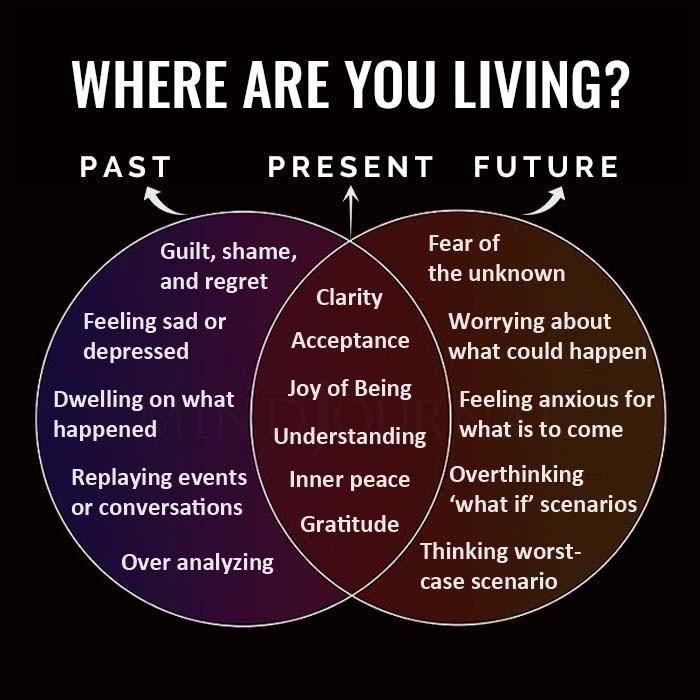
But the middle circle—that’s the messy in-between. These are the mind states and lifestyle patterns that don’t look like outright destruction but still pull us away from presence and connection. Life is full of responsibilities and distractions, and while distraction itself isn’t always bad, it can easily become destructive if we don’t have a foundation of support—through God, community, or honest relationships.
For me, the world is saturated with distractions. Political noise, religious arguments, artificial intelligence, endless short-form videos—scrolling a social feed alone can be enough to depress anyone or drag them into a rabbit hole. The best advice? Pause, and switch course.
I regularly prune my feeds, hitting the three dots and selecting “not interested.” It’s part of staying a healthy human as much as it is about recovery from pornography. My phone greys out most apps at midnight until 8 a.m., but I still find myself burning through my screen time allowance long before the cut-off.
Sometimes I binge YouTube all day, procrastinating on things that actually matter. I may not be a gamer, but I can be just as avoidant.
The middle circle is, for me, often about life avoidance. I can lose hours doom-scrolling political misery or watching other people’s adventures instead of making my own. Even bingeing podcasts and recovery content can keep me from actually showing up in my own life.
Sexually, the middle circle often means navigating solo behaviours. These are awkward but necessary conversations—whether with a sponsor, a friend, or my partner. With my partner, we talk openly about what’s healthy: frequency of masturbation, what fantasies are grounded in reality.
Privacy in my sexual life once bound me in secrecy, shame, and isolation. Now, it’s about honesty. The healthiest place for sex is with my partner, in the outer circle, and that’s a two-way street.
From time to time, I catch myself doom-scrolling into subtle objectification. I tell myself, “I’ll just follow that account—it’s harmless.” But fantasy has to stay grounded in reality. Having a tent in my pants over my partner is fine. Inviting Hollywood actresses to the party? That’s just mixing a stronger cocktail for my little pants party and that’s not something I want to be normalising.
The middle circle is where boundaries get nudged. That’s where Step Ten—and plain common sense—kick in. Reflect, check your thinking, and keep the lights on. Secrecy always alienated me, so I choose to live openly.
I also try to go first in these conversations with the men I co-sponsor. Recovery isn’t hierarchical; we walk side by side. Recently I shared about buying a male sex toy, just to experiment with sensation rather than the lifetime reliance on visual arousal. I use humour in those conversations to take the heat out of it, because these are things worth talking about.
The middle circle isn’t a campsite—it’s a crossing. And it’s always best crossed in company, through honest conversation with a friend.
Because recovery isn’t just about what we’re recovering from. It’s about what we’re recovering to.





 Basecamp Recovery