

“Connection is why we’re here. We are hardwired to connect with others — it’s what gives purpose and meaning to our lives.” – Brené Brown
In recovery, many of us come to understand the four main attachment styles through the lens of psychology — secure, anxious, avoidant, and disorganised. They’ve helped us make sense of our relationship struggles, emotional wiring, and the ways we engage with fear, intimacy, and connection.
The theory of attachment began with John Bowlby, a British psychoanalyst who proposed that early relationships with caregivers shape how we relate to others throughout life. Mary Ainsworth later expanded this research with the famous “Strange Situation” study, identifying patterns in how children seek and maintain proximity to caregivers — patterns that echo into adulthood.
Here’s a brief overview:
1. Secure Attachment
Formed through consistent, attuned caregiving. Adults tend to build balanced relationships marked by trust, communication, and emotional safety.
2. Anxious Attachment (Preoccupied)
Develops from inconsistent caregiving — love is present, but unpredictable. Adults may crave intimacy, fear abandonment, and seek constant reassurance.
3. Avoidant Attachment (Dismissive)
Arises when a caregiver is emotionally unavailable or dismissive. Adults often downplay their needs and avoid emotional closeness, prizing self-sufficiency.
4. Disorganised Attachment (Fearful-Avoidant)
Often rooted in trauma or neglect. Adults may desire connection but simultaneously fear it, resulting in chaotic or push-pull dynamics.
These styles are incredibly helpful — but I believe something new is emerging. A pattern that doesn’t originate in the nursery, but in algorithm-driven culture. In the absence of a formal psychological category, I call it para-social detachment.
What Is Para-Social Detachment?
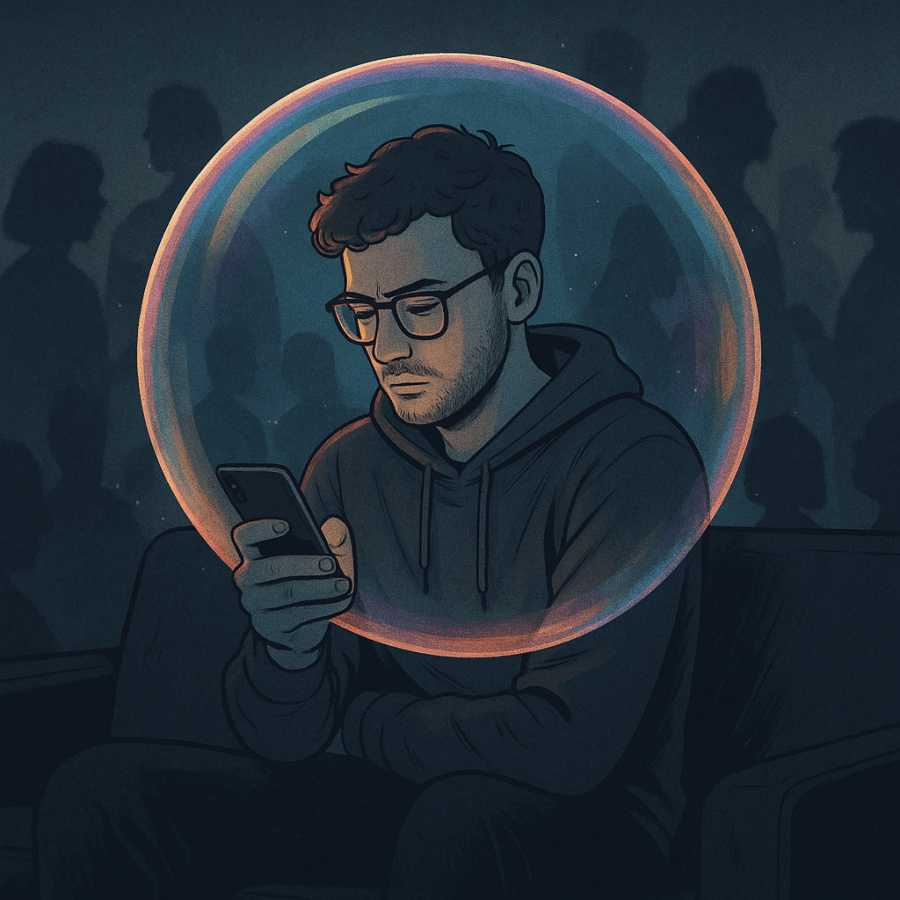
A para-social relationship is one-sided. You feel emotionally invested, but the person on the other side — a YouTuber, celebrity, porn performer, or influencer — doesn’t know you exist. It scratches a certain emotional itch. But it asks nothing of you. You can feel connection without ever risking vulnerability.
The para-social detached person often presents as independent, high-functioning, and confident. But underneath, they may have few mutual, emotionally deep relationships. Instead, they’ve outsourced emotional connection to curated media channels, personalities, or imagined relationships.
We all do this to some degree — it’s part of the modern human condition. But for some, it becomes the primary relational posture. I see it behind the bar where I work: people scrolling instead of speaking, couples together but miles apart, lone drinkers more engaged with a streamer than the humans next to them.
And I’ve been that guy too.
Traits of Para-Social Detachment
Emotional Outsourcing: Relying on influencers, creators, or parasocial “relationships” to feel emotionally soothed or stimulated.
Curated Identity: Projecting a version of self online while avoiding vulnerability in real life.
Low Relational Depth: Few deep, reciprocal friendships or emotionally intimate bonds offline.
Fantasy Over Risk: Preferring imagined or controlled connection to the messiness of mutual relationships.
Digital Numbing: Using screens, porn, or endless scrolling to manage mood or avoid discomfort.
Controlled Connection: Avoiding emotional unpredictability because performance feels safer than presence.
This isn’t isolation by circumstance. It’s isolation by design — a subtle self-protection masked as autonomy.
This isn’t just about screen time. It’s about how digital culture has shaped our nervous systems, rewired our brains, and taught us to expect connection without risk.
When real-world relationships have felt unsafe, overwhelming, or unfulfilling, para-social detachment can seem like relief. No one argues with you. No one lets you down. No one leaves. But that curated safety become a prison. And what once protected us begins to isolate us.
Healing the Para-Social Detachment
You’re not broken. You’re not bad at being human. You’ve adapted — brilliantly — to a world that rewards surface over substance.
But healing is possible.
Here’s what it might look like:
Name It – Be honest with yourself. How much of your connection is one-sided or curated? Get Real, Not Just Raw – Vulnerability isn’t about oversharing online. It’s about showing up in messy, mutual, offline relationships. Reclaim Human Spaces – Prioritise environments where you can’t control the outcome: recovery groups, shared meals, long walks, awkward chats. Detox Slowly – Not to punish yourself, but to pursue something deeper. Unplug to plug in. Build New Habits of Presence – Eye contact. Silence. Being interruptible. Sitting in discomfort without reaching for the scroll.
You don’t need more followers.
You need friends who’ve seen the basement of your soul — and still want to sit down there with you for a cuppa.
The para-social world might soothe our loneliness — but it can’t heal it. That starts when we stop mistaking projection for connection.
We don’t heal alone.
We heal in eye contact.
In shared silence.
In imperfect, mutual, embodied relationships.
If this lands uncomfortably close to home — you’re not the only one.
I’m in this too. All of us are, to some extent.
But we don’t have to stay disconnected.
 Basecamp Recovery