Endeavour Through Adversity

https://amzn.to/3U1BWOz

“Walking had taught me that when things get really hard, all you have to do is take the next step.” — Raynor Winn

We all have a past — a life before that pivotal moment when everything changed. We all carry memories that sit somewhere between regret and revelation; moments that taught us some of life’s hardest but most needed lessons.

If you’ve read earlier entries of this blog, you’ll know the tapestry of what had to change in my own life. And while there’s regret — of course there is — I’ve come to realise that I can’t change the past. What matters most now is learning from it and living forward in the light those darkest moments cast — light that revealed who I really was, beneath the ‘pain-wall’ I’d built to survive.

These parts of ourselves are deeply personal. They shouldn’t be weaponised. If this world needs more of anything, it’s stories — real stories — of redemption, restoration, forgiveness, and the empowerment that comes through love.

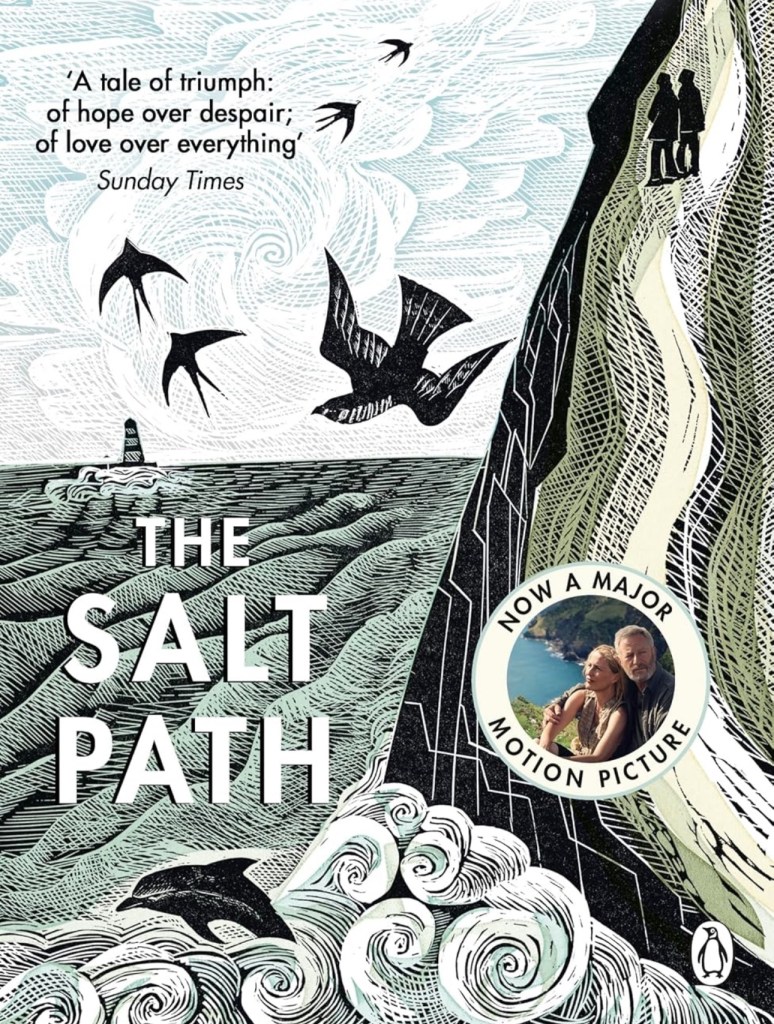
Just a year or so before I landed at Basecamp Recovery with a head full of faulty wiring and a heart heavy with trauma and uncertainty, I stumbled on a book that would deeply shape my outlook: The Salt Path. I had no idea how much this now two-million-copy story of human persistence would mean to me.

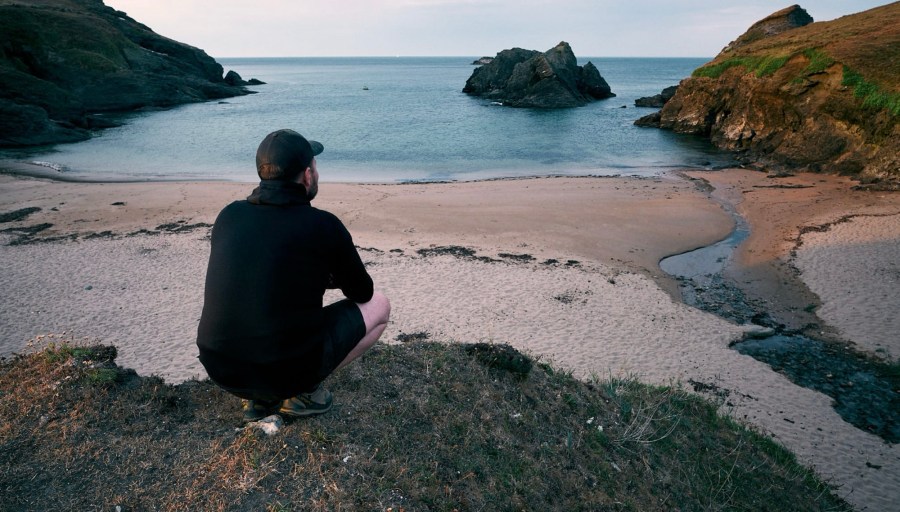
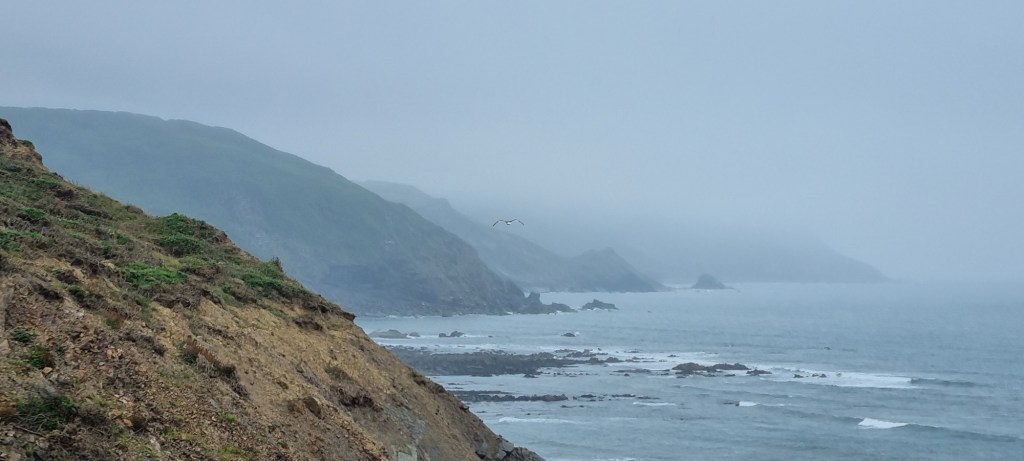
Raynor Winn’s words struck a chord. They were raw, vulnerable, yet quietly powerful. Her story prompted me to take on a coastal marathon challenge — the North Devon coast stretching into Cornwall — to mark a new decade of my life. I wanted to stick two fingers up to the jaded voice in my head whispering that age, failure, or fear would define me. It was my way of saying: I will not let uncertainty dictate my story. I will show courage in adversity and cut through the clouds.

Since then, I’ve fallen in love with that stretch of coast. It’s become our place of escape — those cliffs, those endless steps, those headlands I’ve dragged myself over while my partner and our dogs crew my races from the car. It’s become more than a landscape; it’s been therapy.

As I write this, I’m partway through Landlines, Raynor’s third book, and eagerly awaiting both her fourth and the newly released film adaptation. But this week, like many others who’ve connected with her story, I was shocked to see the media storm brewing.

The Observer ran a feature that reads like a hit job. Tabloid-style character assassination. Most painfully, they questioned whether Moth’s diagnosis of CBD (Corticobasal Degeneration) was even real — a cruel, baseless suggestion that flies in the face of everything the books so compassionately express. The irony? The article’s own claims are riddled with more inconsistencies than the ones they accuse Raynor and Moth of fabricating.

Our lives are vastly different, yet I relate to their struggle — the daily grit of just getting up and carrying on when life has flattened you. I know what it’s like to live with the hangover of a former life and still try to walk forward.

Today, Raynor released a statement — composed, dignified, full of unwanted vulnerability. She shouldn’t have had to. No one should be forced to publicly defend their trauma, their partner’s illness, or the private truth behind the life they’ve bared on paper for others’ comfort and courage. And yet, here we are.

Success always invites a few spectators who show up with nothing but matches and gasoline. But I believe they’ll weather this storm — they’ve certainly weathered worse.

I highly recommend The Salt Path to anyone feeling overwhelmed or weighed down by life. It’s a story packed with empathy and resilience — a quiet anthem for those walking through their own wilderness, step by step.

Significantly insignificant

“The essence of trauma is disconnection from the self. And the healing is in reconnection, in discovering that you were always worthy, always enough.”

— Dr. Gabor Maté

As a kid, I remember how deeply my identity became intertwined with the vision of being a soldier — a Marine, to be specific. I went to open days for the Royal Marines and the Navy, and to this day, I still feel a connection. Sometimes that connection is uncomfortable.

The outdoors has always been — and will always be — a place where I feel in perspective. There’s something about standing on the side of a mountain and flying my drone out into the distance that reminds me just how tiny I am and how massive nature is. I find comfort in that. And my faith tells me that even in this reality of insignificance, I’m important. That I fulfil a role in the world only I can. That the very hairs on my head are numbered.

That same value — that same sacred worth — applies to every single person, regardless of race, religion, or whatever other metric we humans use to divide ourselves.

When I placed all my hope and identity into the military and it didn’t work out — twice — I was left lost. At 16, holding back tears on the train home after failing again, I felt like I’d already blown my life. That failure stayed with me for years. I couldn’t shake the label I’d given myself.

Today, in my 40s, I work part-time in a bar to supplement my small self-employed business. I meet a lot of veterans — and a lot of guys who, like me, carry that same lost feeling. I see people every day who are hurting, putting on brave faces, venting anger about things that aren’t the real issue. Just trying to escape the pain of their own lives.

I live today with a universal love for my fellow humans. But I still struggle. I still have to catch myself when I find my gaze drifting and turning the fairer sex into objects. I’ve developed tools to spot that objectification in my thinking — and to stop it. That’s part of why I believe pornography is such a damaging thing: it robs people of their dignity. It reduces them to parts. It devalues something sacred.

When you start living with a higher view of human value, it becomes hard to stomach what you see on the news. It breaks me to watch what’s happening in the world — the way people are dehumanised, treated as disposable, even as target practice. A rogue military backed by a global arms industry. A Western church that’s lost the plot, baptising nationalism and forgetting Christ.

I still know people in the profession that gave me such a long hangover from my younger years. Life has shown me it’s just a job. And that’s helped me. I’ve got a lot of respect and admiration for the lads who serve — and I still carry a heart for them. But I don’t have to see soldiering as the defining measure of worth anymore.

Today was a quiet day at work. No shouting, no angry old blokes ranting about women pundits in sport or refugees in boats — just a young recruit chatting with me about drones and emerging tech. As the conversation drifted, we touched on AI, facial recognition, and drone warfare — specifically quadcopters carrying munitions capable of precision strikes in urban environments.

And then it hit me.

The British military are procuring and acquiring weapons systems based on how they’ve performed on real people in real theatres of war. These technologies are developed, refined, and tested — in places like Gaza — and then brought into service. It’s not just theory or simulation. It’s real-life results… on human lives.

I felt physically sick. To think that the profession I once idealised is now so entwined with this kind of complicity. But I can’t get too self-righteous — because I too have dehumanised others in my life. I’ve consumed people. Turned them into disposable visuals. That history still carries shame for me.

Politics has always been a trigger. But even with my baggage — even with the mistakes I’ve made — I can’t ignore the feeling that we’re heading toward a point where society will look back in horror at what we allowed. At what we ignored. At how we looked the other way.

I’ve always come from the dissenting left. As a Welsh family, we were Labour through and through — the old, working-class, union kind. I’ve worn a keffiah for years, and even during my time as a reservist, I struggled with the casualness I encountered when it came to the militaries attitude to taking lives.

I’m sharing all this because, over the last few years in recovery, I’ve been quiet. I didn’t want to rock the boat. I felt like my opinions didn’t count because of who I’d been — like I had no right to speak. But that’s shame talking. And I don’t want to live out of shame anymore.

That doesn’t mean becoming a crusader or a moralist. I don’t need to preach at anyone. But I do live in a society. My vote counts just like everyone else’s. And I no longer want to avoid difficult conversations or look the other way when something is wrong.

So, maybe this is me reconnecting with politics — not as a source of anger, but as a response to love. Maybe it doesn’t have to be a trigger anymore.

Maybe, just maybe, I’ve just found peace in the idea of significant insignificance again.

“We have been silent witnesses of evil deeds. We have been drenched by many storms. We have learned the art of equivocation and pretense… Are we still of any use?”

—Dietrich Bonhoeffer, After Ten Years

Gethsemane by Adam Abram

Easter Reflections: Love, Failure & the Grace That Holds Us

Last year, I felt deeply involved in the Easter experience—connected to the church and included in the story. This year was different. It was busy, and Easter seemed to pass by like another season in exile.

But something has shifted. This time, I don’t feel like a lost cause.

The last four years have taught me that my validation and right-standing don’t come from other people’s perceptions or opinions. They come from being honest—honest about who I am, and how that looks in the mirror of accountability.

This week, I passed some church folks standing in the city with a simple question on a board: On a scale of 1 to 10, how good do you need to be to get to heaven? It was thought-provoking and clever. I wished them well and shared honestly where I’m at. I explained I don’t currently fellowship in church, and if I did, my experience tells me I’d be viewed as “living in sin” because I’m not married to the woman I’ve shared my life with for 11 years.

She’s loved me more deeply than any other human. She forgives, she chooses love, and she stands beside me every day as we face life’s challenges together. I dream of marrying her — and I will — but not just to tick a religious box or appease fear. It will be when the time is right for us both.

Tonight, Easter Sunday, before hitting the pillow, I picked up my Kindle and read through the Easter story in Mark. A few things struck me — not as theology, but as lived experience. Maybe you’ll relate.

When Jesus is asked about the greatest commandment, he doesn’t quote a rulebook. He says: love—love God, love others. He even says it matters more than sacrifices and rituals. It made me wonder: how often does modern Christianity forget this? Sometimes it feels like a transaction — a “get ahead” religion, where if you tick the boxes, you’re in. But Jesus cuts through all that. It’s not performance. It’s relationship.

That hits home for me in recovery. It’s easy to think the goal is to “do it right” — stay clean, stay strong, tick every box. But the foundation isn’t perfection. It’s love. It’s grace. That reminder lifted the weight from my chest.

Then there’s Peter — the bold disciple who promises he’ll never fall, never deny. Jesus, knowing better, gently tells him he will. And sure enough, when pressure comes, Peter denies him three times. That stings. Because I get it. I’ve said, “Never again.” I’ve meant it. But addiction doesn’t care about intentions when the mist rolls in. Peter’s story reminds me that failure doesn’t mean I’m disqualified. It just means I’m human. Jesus knew Peter would fall, and still loved him. Still called him. Still built his church on that man.

Finally, I saw something deeply human in Jesus at Gethsemane. Overwhelmed with sorrow, he asks his friends to stay near. He prays, “Father, if it’s possible, take this cup from me.” That line… it hits different. He’s God — but he’s also human. Wrestling. Overwhelmed. Longing for a way out. He doesn’t walk into suffering like a stoic hero. He hurts. He grieves. And still, he chooses love.

So if you’re in a hard place this Easter — if you’re hurting, or you’ve fallen, or you’re afraid — you’re not disqualified. You’re not alone.

Brokenness and contrition are never despised.

Reach out. Be honest. Don’t go it alone.

background of the matrix system failure

Adolescence & the Real Matrix

I was hiking with a friend and his partner once, and we started talking about addiction — specifically porn, and my own journey through the 12 steps. Her reaction stuck with me. She seemed repulsed. To her, anyone struggling with porn was basically an incel — morally broken and a threat to women.

I pushed back. How can someone who calls herself a feminist support friends doing OnlyFans, if all male addiction is framed as incel or predatory? Her answer only reinforced the sense that this isn’t a simple male vs female issue. It’s more complex — and far more broken — than that.

I’ve often reflected on that conversation, especially watching Jordan Peterson break down publicly when speaking about young men today. There’s a genuine grief there. A recognition of just how many are silently falling apart. Lonely. Isolated. Disconnected.

I met a guy in a bar recently who’d walked thousands of miles alone. He told me he’d developed imaginary friends and held conversations with himself in different accents. It was funny at first — but deeply human underneath.

And that’s what hit me when I watched Adolescence this month. Everyone talks about the incel narrative in the film, but that’s just the tip of the iceberg. Beneath it is something more subtle, more tragic, and more universal:

The breakdown of real connection.

Instagram. Porn. Algorithms. Family disconnection. Unresolved generational trauma. It’s all there — the things we don’t talk about. The things that are quietly stealing our humanity.


The Real Matrix

We’ve all heard the word. The “Matrix.” That idea of waking up, escaping the system. Some turn it into a conspiracy. Others use it to market themselves as the rebel hero.

But the real Matrix? It’s not out there. It’s here. It’s in us.

It’s the daily, invisible trade we’ve made as a culture:

People for content.

Bodies for attention.

Intimacy for illusion.

We no longer see each other. We use each other.


Two Sides of the Same Illusion

Men are told to consume — to chase validation, control, performance. They numb out with porn, lose themselves in fantasy, and confuse dominance with strength.

Women are told to monetize — to turn their beauty into a brand, their vulnerability into engagement. They carry the weight of perfection, comparison, and burnout behind curated smiles.

And here’s the truth:

Both sides are losing.

Both are exhausted.

Both are forgetting how to simply be seen.


The Counterfeit of Connection

We were made for relationship. For truth. For presence.

Instead, we’ve built lives around followers, DMs, streaks, swipes. We call it empowerment. Progress. Winning.

But the anxiety, addiction, depression, and disconnection say otherwise.

You can’t build a healthy life by consuming other people.

Not through screens. Not through porn. Not through OnlyFans.

And you can’t build it by turning yourself into a product, either.

You’re more than that.

They’re more than that.


No More Heroes. Just Truth.

There are no influencers coming to save us. No hustle culture that heals. No algorithm can replace grace.

What’s needed is a full awakening — not to a system out there, but to the lies we’ve believed about what it means to be human.

You were made for more than clicks and currency.

You were made for connection. For meaning.

Rear View Mirror

I’m the problem, It’s Me

Today’s reflection work hit me hard. When I think about my past attitudes—how I used to be—I feel a mix of shame and anger.

I often think of Anakin Skywalker and his fall to the dark side, summed up in one line: “From my point of view, the Jedi are evil.” It’s easy to believe a lie we tell ourselves, and the lie I used to cling to was this: I’m not getting what I need, so I’ll do whatever it takes. I played the blame game, justifying selfish behaviors.

Looking at my life now, surrounded by love and support, I feel anger—not at others, but at myself. I cast my partner as the villain in a story where I was the one twisting reality. Resentment and entitlement warped me out of my true shape.

Owning the Past Without Losing the Present

I sit with these feelings often. Learning to own my past without letting it steal the present has been a process.

When I caught up with an old friend after some time in recovery, he said, “It’s great to see you finding your narrative.” At the time, that stung. It felt like he was suggesting I was just spinning my past into a palatable story. Later, I heard Richard Osman say in a podcast that people who heckle in comedy tend to have too much “main character energy.”

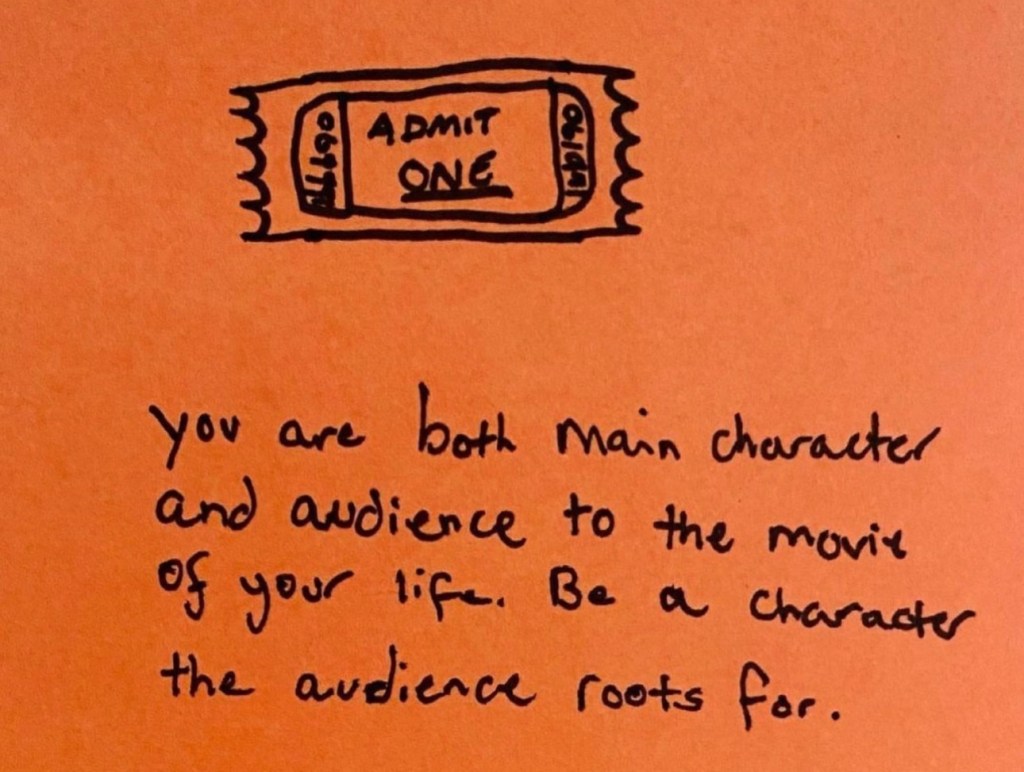
That hit home. I’ve lived much of my life like the protagonist in my own story—and sure, most of us do—but I was consumed by it. Selfish. Unwilling to reflect. I rarely considered how my actions affected others.

Recovery teaches that looking in the rearview mirror is necessary, but the real trick is balance: remembering where you’ve come from to avoid complacency, without letting the past rob you of the present or make you fearful of the future.

The Power (or Purpose) That Drives Us

In my recovery circles, I meet people from all walks of life, each with their own struggles. The Twelve Steps encourage us to find someone we relate to and consider asking them to be a sponsor. One common hesitation I hear is about the “God word” or the idea of a higher power.

There are a hundred ways to navigate this, but rather than debating the existence of God, I offer a simple reframe: substitute Power for Purpose, and you won’t go far wrong.

My past purpose was self-serving. I had bags of main character energy—and in a world full of individual-centric humans, it’s easy to hide in plain sight, fractured, flawed, and, to quote Incubus, “going nowhere really fucking fast.”

Purpose Now?

For those wary of religious language, the “God-lite” version is this: other-centered love, service, charity, and being a blessing to others. It means showing up for the people we love. Listening more than speaking. Moving from theoretical charity to real action.

So the question is, What’s driving us?

I often ask sponsees, If I cracked open your back, what kind of battery would I find? Because if we’ve ended up here, chances are we’ve been running on the wrong power source.

Luke 15:20

My advent state of mind

Since my time in the Twelve Steps, I’ve seen people come and go—some to better lives, others back to the places they were trying to escape. Letting people go their own way and figure things out can be a painful process.

For many of us with addictions, our behaviours were illusion-based attempts to feel control over life: to regulate feelings, avoid discomfort, distract from pain, or numb the struggles life throws our way.

One observation I’ve made is that the spiritual aspect of Alcoholics Anonymous (AA) can be a stumbling block for many. There’s an intentional reluctance in the program to let people intellectualise spirituality or try to grasp its mysteries. Instead, the invitation is for each person to find their own Higher Power, whatever that may be.

But here’s the challenge: many of us have already created our own gods in our minds. Addiction was the god, and the behaviour became the spiritual practice.

It’s strange, then, to witness the wrestling of an addict explaining their reluctance or disdain toward the concept of God. For some, this resistance stems from deep-seated traumas: pain inflicted by a flawed, “believing” parent, or toxic cultural encounters with religion during their youth. These complexities make the idea that “we are spiritual beings having a human experience” a difficult truth to arrive at. The program, wisely, doesn’t try to offer a one-size-fits-all solution. Instead, it leaves the individual to find their way—or not, as is sometimes the case.

When you combine this existential wrestling with the challenges of processing emotions, healing trauma, navigating withdrawal, and learning to live life on life’s terms, it’s easy to see why the Steps aren’t for everyone. I’ve lost count of how many times I’ve felt resentment toward the program or the meetings. But when I pause to reflect on where I’ve come from, I find grace—for the process and for myself.

There’s a phrase in recovery: progress, not perfection. It’s a sentiment that clashed with my old-school beliefs about God. I was raised to believe in an angry, all-seeing God of justice. But one perspective softened my heart: Luke 15:20, the story of the prodigal son.

The verse says, “While he was still far off.” The son, who had squandered everything on reckless living, thought, I wonder if Dad would take me back? And yet, while he was still far off, his father ran to meet him with open arms.

That phrase, “while he was still far off,” changed me. It reminds me that I’m loved just as I am, even in my mess and imperfection. Some days I feel on top of the world; on others, I’m weighed down by regrets and depression. Practicing gratitude isn’t always easy, and seeing the positive isn’t my strongest skill.

In some reflection time this week, I realized I still struggle to accept things I cannot change. Mr. Recovery, Mr. Serenity—still falling short. But that’s okay. It shows me I’m loved and accepted even when I miss the mark.

I’m glad that the false idol of an angry, vengeful God has been replaced by a loving Higher Power. The pressure of living a perfect life was never an expectation placed on me by anyone but my own broken self.

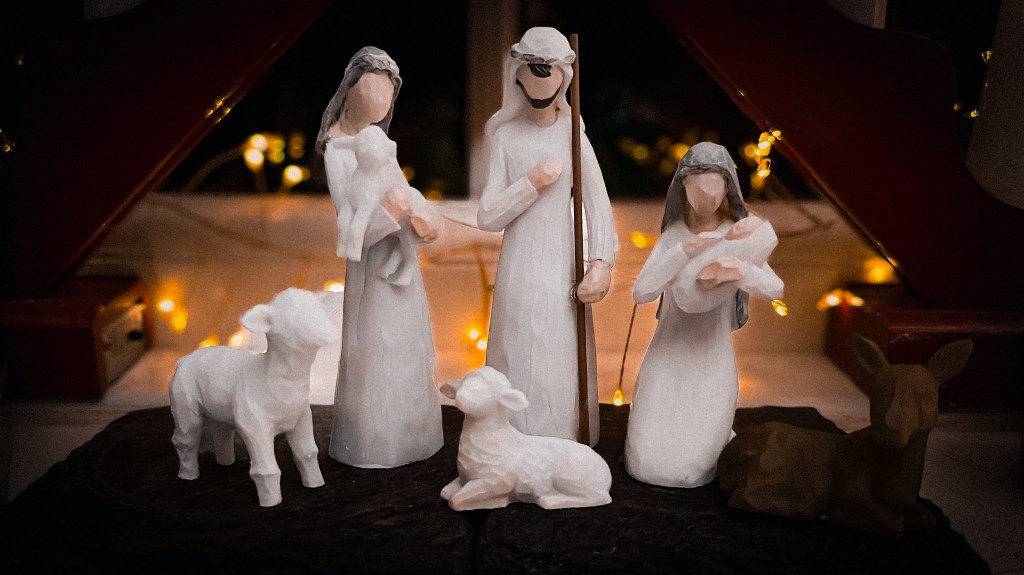
My partner knows I’ve been finding things difficult lately, she knows this year has in some ways crushed me and that my faith has become so important to me. We had said it would be nice to feel a little more of the Christmas spirit, with that, I came home to my first gift this Christmas, a nativity scene which I have banged on about being missing from our Christmas setup for years.

don't judge yourself by your past

Fear is a liar

“For God hath not given us the spirit of fear; but of power, and of love, and of a sound mind.”
‭‭2 Timothy‬ ‭1‬:‭7‬ ‭KJV‬‬

In the Twelve Steps, we learn how fear can take hold of our lives. That’s why we keep an inventory of our fears, resentments, and conduct—it helps us see things clearly.

I’m nearly four years into this recovery journey. Despite countless hours of therapy, study, meetings, step work, and a life dedicated to self-development, I still face some truly hellish days. Today was one of those days.

One of my greatest struggles is my tendency to spiral into fear and catastrophizing. It doesn’t happen all the time, but certain triggers or mental states can create a cocktail of stress that quickly snowballs. In those moments, I feel mentally vulnerable.

Here’s the pattern: My fears and anxieties eventually subside, and I hear a small voice inside whisper, “Maybe next time, you could try trusting me.” I believe that voice is God’s gentle invitation, reminding me to combat fear with faith.

But what do these spirals actually look like for me? Here’s an example:

It’s winter—a season I love, but also a time when colds and flu run rampant. Add to that a rough night’s sleep (thanks to a family member accidentally calling at full volume in the middle of the night), and you wake up exhausted. Now, combine that with skipping breakfast and lunch on a busy day, and suddenly hunger pangs and nausea hit like a freight train.

We’ve talked about the HALT model before: when we’re Hungry, Angry, Lonely, or Tired, it’s vital to practice self-care. But in a weakened state, fear loves to creep in and do what it does best—distort reality.

It’s on days like this that I have to remind myself to put fear into perspective. Rationalizing with myself sometimes helps, but experience has taught me that talking things through with someone else is far more effective. After all, a problem shared is a problem halved, right?

I recognize what’s happening in my head. I know my baseline behaviors and how I tend to react, but fear and anxiety can still knock me flat. That’s when I lean on trusted fellows or loved ones to give me a much-needed reality check. Sometimes all it takes is someone saying, “Give your head a wobble.”

And then I’m reminded:

False

Evidence

Appearing

Real

Tonight, as I reflect and work my program, I see how quick I am to believe fear and anxiety—and how much slower I am to practice serenity, trust God, or listen to rational thought.

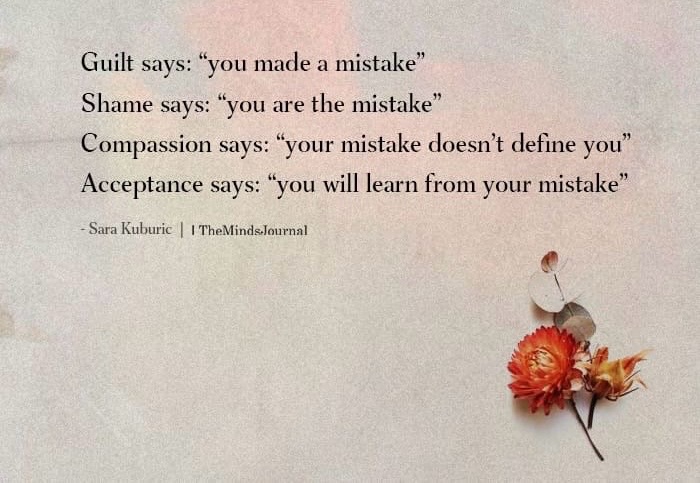
quote about guilt

When September ends

It’s gone midnight, and my mind is racing. I can feel the anxiety building as an anniversary of shame approaches – a year since one chapter closed and another began. Here I am, turning yet another page.

Isn’t it strange how revisiting difficult times after just a year can shake you to your core? Whether it’s a breakup, the loss of a loved one, or in my case, a traumatic experience – the kind that leaves you limping for the rest of your days on God’s green earth – it seems like time alone doesn’t ease the weight.

For me, May and September are the months of shame. The reasons don’t really matter here, but let’s just say that sometimes hell is the reminder, the consequence, and the prison of our own making. That said, none of us should be defined by our mistakes when we’re trying to own them, learn from them, and turn our lives around.

Now seems as good a time as any to remind myself that the person I am today is a world away from who I was last year – and light years away from the person I was three and a half years ago.

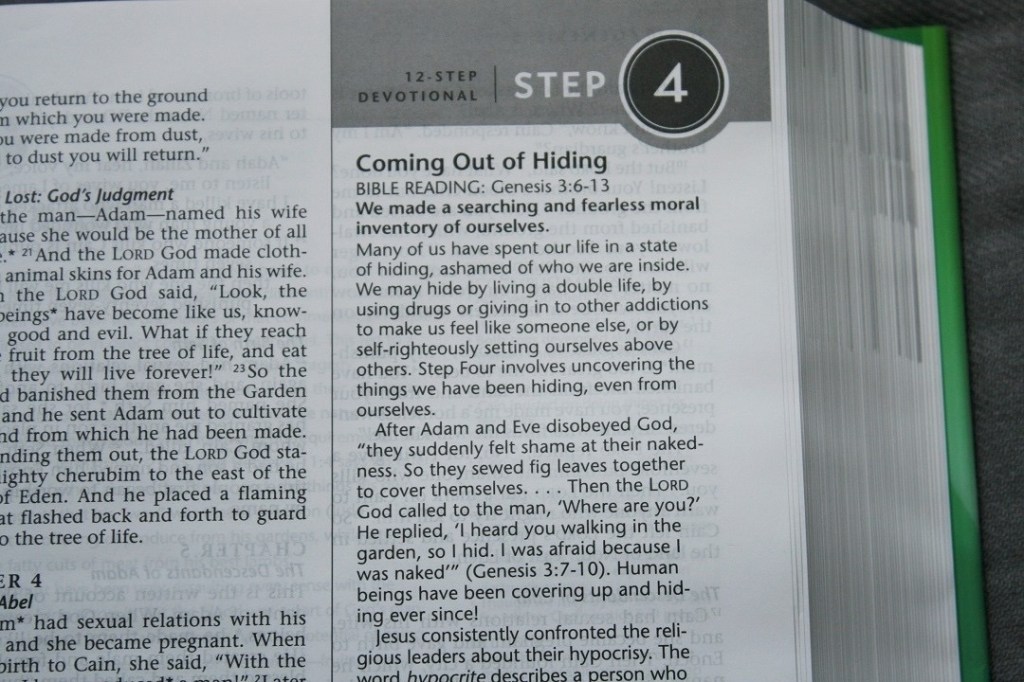
If you’ve been following my blog, it’s probably clear that my recovery has gone hand in hand with reconnecting to my faith. The mantra of my programme is “from shame to grace,” so it’s no surprise that the forgiveness and reconciliation offered through the good news of Jesus (the gospel) is an invitation I simply couldn’t pass up. Especially when you’re someone like me.

I have much that needs forgiving, so I have much to own in my daily life. These reminders can come at any time – daily, weekly, monthly, or in this case, annually.

One of the biggest lessons I’ve learned in recovery is the need to set aside our baggage when it comes to faith – or “the God word,” as it’s often referred to in Twelve Step programmes. However you square that round hole, what really matters is finding a power greater than yourself. Too often, though, that power ends up being a loved one or a spouse. In my experience, placing faith in others is something I’ve done my whole life. My addiction was the worship of the created and the ignorance of the Creator.

I once heard that porn addiction is a worship problem, and that really resonates with me.

As I sit here, offering up my fears and anxieties to God, I’m reminded of how often Christ said, “Do not worry.” My usual response is to spiral into fear, but when things work out, I’m left with that still, small voice saying, “Maybe next time, you can trust me.”

In my home group, we recently focused on faith over fear, and it became a sort of show-and-tell of higher powers. Focusing on God really helped me, as I often feel I have to leave my belief in Christ at the door, reducing Him to a metaphor or presenting my faith through the language of the Steps and Traditions.

Doctor Bob puts it like this in the Big Book of AA (pp. 180-181):

“If you think you are an atheist, an agnostic, a sceptic, or have any other form of intellectual pride which keeps you from accepting what is in this book, I feel sorry for you. If you still think you are strong enough to beat the game alone, that is your affair. But if you really and truly want to quit drinking for good and all, and sincerely feel that you must have some help, we know that we have an answer for you. It never fails, if you go about it with one half the zeal you have been in the habit of showing when you were getting another drink. Your Heavenly Father will never let you down!”

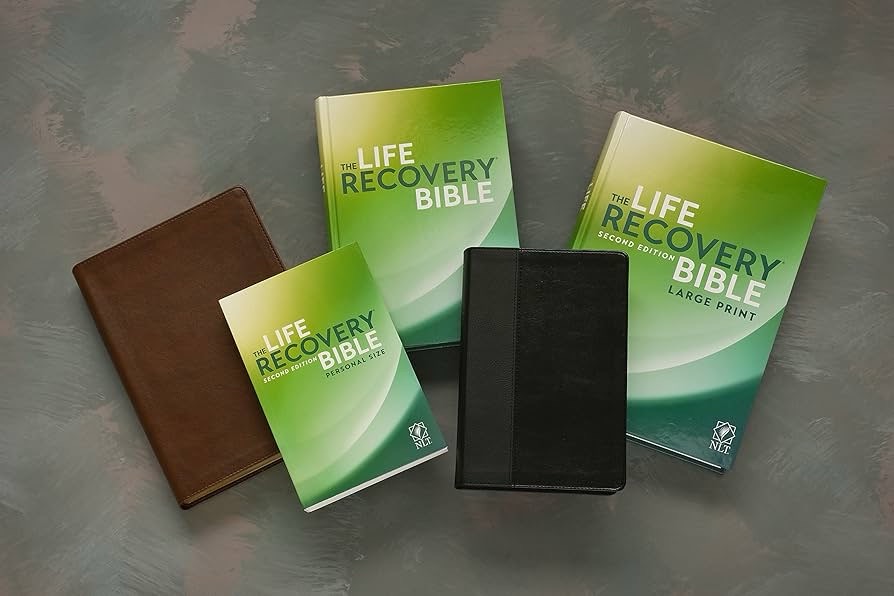
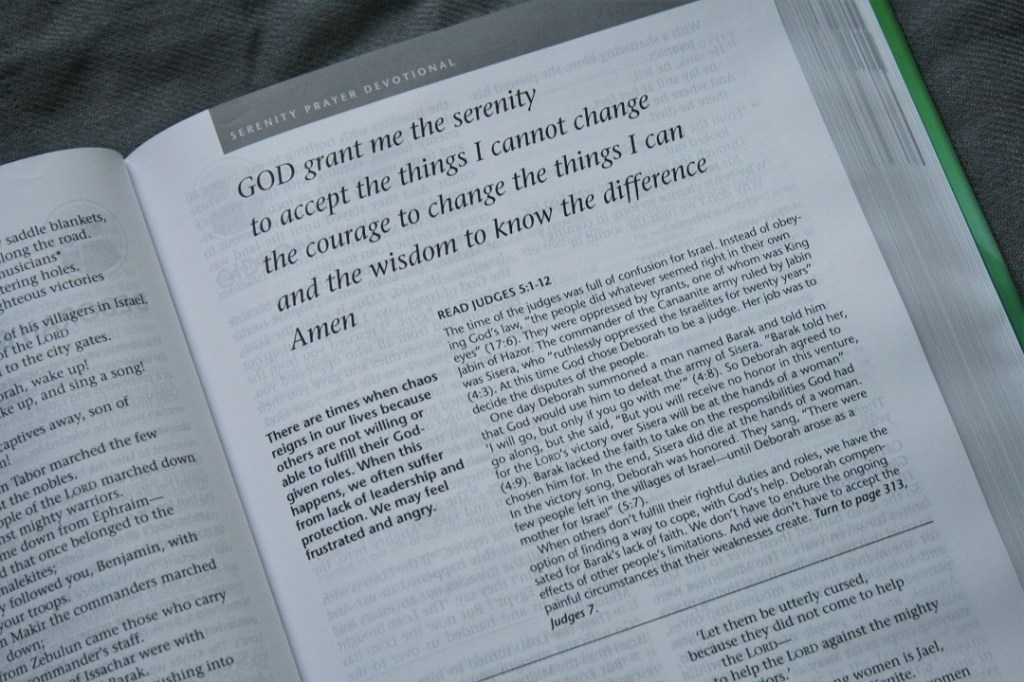
I love how direct the Big Book is, and I’ve been getting a lot out of my Life Recovery Bible from Tyndale recently. It’s put together by people who really understand addiction, the Twelve Steps, and the God whose love and mercy triumph over judgement.

It’s full of devotional readings and study sections that blend my two worlds perfectly.

When fear threatens to overwhelm me, I turn to my programme and to God. When shame comes knocking, I remind myself of who I am now, not who I used to be.

Tomorrow will be fine. All I need to do is let go of trying to control the world around me, and live life on life’s terms, just for today.

The Shack

Forgive a wretch like me?

This is a faith-heavy blog today, and it might not fit everyone’s “understanding” of God, but this one’s me opening up. If it resonates with someone, then all the more reason to hit publish.

Over the past year, my journey in recovery has reconciled me to my faith. A part of that has been picking up my guitar and getting reacquainted with songs of worship. Expression of my inmost being through prayer and worship is part of my 11th step, but it’s what I’m made to do in my eyes. These days, I am pleased to be more a collector of second-hand Bibles than a hoarder of pornography. My life of faith feels a lot more sustainable than my previous brushes with religion.

Forgiveness is key here. To live at peace with this warring world requires a tough commitment to accepting this as a continual process. We live in a world that needs more forgiveness. Each day, we do things or experience things that mean this powerful transaction needs to take place in real-time, not leaving time to ponder and form resentments.

I can’t help but think of the story and film of The Shack when I think about extreme forgiveness. It’s the story of a man wracked with grief, whose pain and anger would tear him apart until God met with him in the midst of his trauma. Mack found that to continue in life and be the father to his remaining children they deserved he would need to find forgiveness even for the man who committed the most evil of deeds.

Jesus lived on the extremes. When he walked the earth, he wasn’t here for some earthly religious institution. He was here for the broken, the lame, the blind, the leper, the tax collector, the adulterer, and the demon-possessed. His message of a welcoming father’s kingdom without pain and sorrow through the full remission of sins was offensive to man’s religious and legalistic thinking.

As a recovering porn and sex addict, I feel like a modern-day leper. In recovery, we can find ourselves on the fringe of society. Being forced to behold the mirror of accountability to own your deeds and the entirety of your being with no spin or false narrative can make you feel in the world but not entirely of it.

I reflect on Desmond Tutu’s book The Book of Forgiving which opens with two statements that could maroon you on an island of struggle:
“There is nothing that cannot be forgiven; and, there is no one undeserving of forgiveness.”
Just reflect on that for a minute, and really sit with it.

My blind consumption of sexual content online was just a stitch in the overall tapestry or a mere pixel of this bigger picture that people don’t want to talk about or admit. Previous posts point to the scale of the problem; this one is to remember that shame isn’t a very good fuel supply. I remember that, as with many things, I sat on a spectrum of progression where I wasn’t the worst but far from where I belonged. “I once was lost but now am found.”

For quite some time, I have donated to Thorn, a charitable organization that works with law enforcement agencies to bring down traffickers and child abusers at the source. With this in mind, I watched the much-acclaimed film The Sound of Freedom.

This film was a tough watch, focusing on the real-life undercover work of Timothy Ballard. The film was very moving and filled me with sadness, knowing that the porn industry fuels sex trafficking and abuse.


Living with my past is tough at times. Constant reminders and regrets can often lead to a great deal of shame, and it’s here I land at the core of what works in my recovery:
God loves a wretch like me infinitely. There is nothing that I can do that will clean me up under my own will. No amount of amends will fix me if I only look at all this through the lens of judgment and legalism. The invitation through the steps is a life dedicated to union with God and my fellow man.

Even for a wretch like me, the journey from shame to grace through the twelve steps and communion with God has led me to today. I am content, I am grateful, I am in love and loved, I am whole, and I am enough. Today, I am present. I Am sees no wretch when he looks at me.

Well I do

We are the lucky ones

Three years into recovery, I will level with you: at times, it is tedious. The repetition of maintaining one’s recovery can zap the serenity, feed resentments, and send you into a spin.

I came across this sentiment while watching “Elementary,” so feeling it comes as little surprise to me.

These feelings are fleeting, to be honest. They dissipate with practicing gratitude.

This week, I read—as I often do—about a man who was missing. The police released an appeal out of concern for his well-being. Sadly, these kinds of posts are common. This guy was similar in age to me, and the ominous update later came that he had been found. The “no suspicious circumstances” statement implied that his demise was self-inflicted.

When I think back to my darkest moments, I felt that option was a solution to the problem that was me. Thankfully, a flicker of hope remained bright enough that I was able to find help and support. My story has been one of rescue; I am one of the lucky ones.

In our meetings, we have a moment of reflection to consider the addict who still suffers. My thoughts were with this poor soul who I never knew, but on some level, I suspect his picture was taken in a clinical booth, implying a legal intervention. I would assume the weight of his reality was too much to bear. I don’t pretend to know this, but that would be true for some of the many who I often see written about.

At times, the routine of meetings is a repetition I wish I could avoid, but these sobering moments—remembering where I could have ended up—provide me with the smelling salts I need.

I was away last week on a business trip. The disrupted routine and alien environment meant I had to be extra vigilant about my feelings, triggers, and working my program.

I would love to report that it all went without a hitch, and in reality, that’s not far from the truth. But the pesky brain of an addict often serves up a few curveballs. In this instance, my intrusive thought was a nostalgic one, reminiscing and rose-tinted thinking. Like the member berries in South Park high on nostalgia.

As I marched back to my hotel, a news agent with an open door showed me the top-shelf magazines. I remembered the adrenal hit of having the guts to buy one. My tech is so locked down that the blind nostalgic thought of “oh, remember magazines, wouldn’t it be good if I just…?”

Control only applies to how we respond. In this case, I dismissed that thought and sent it packing. But my thousand-yard stare to pick out a porn mag at a hundred paces shows just how conditioned my brain can still be, even after all this time.

Here’s what you need to remember: there is always hope. We need connection to others, and there is always help available. The Step Nine promises remind us of the correct lens to view things:


If we are painstaking about this phase of our development, we will be amazed before we are half way through. We are going to know a new freedom and a new happiness. We will not regret the past nor wish to shut the door on it. We will comprehend the word serenity and we will know peace. No matter how far down the scale we have gone, we will see how our experience can benefit others. That feeling of uselessness and self pity will disappear. We will lose interest in selfish things and gain interest in our fellows. Self-seeking will slip away. Our whole attitude and outlook upon life will change. Fear of people and of economic insecurity will leave us. We will intuitively know how to handle situations which used to baffle us. We will suddenly realize that God is doing for us what we could not do for ourselves.

Are these extravagant promises? We think not. They are being fulfilled among us—sometimes quickly, sometimes slowly. They will always materialize if we work for them.


The primary purpose of the program is to carry the message to those who suffer from addiction. I wish doing so for sex addiction wasn’t such a dark subject matter. The shame and alienation that happen mean suffering people hide in plain sight. Whatever the manifestation of this disease, all deserve a chance to find recovery and redemption.

If you have stumbled upon this post in desperation, know that there is help out there. If you want to be signposted to places to get help, reach out.

https://www.samaritans.org/how-we-can-help/contact-samaritan/chat-online/

Keep coming back to this track