“Walking had taught me that when things get really hard, all you have to do is take the next step.” — Raynor Winn
We all have a past — a life before that pivotal moment when everything changed. We all carry memories that sit somewhere between regret and revelation; moments that taught us some of life’s hardest but most needed lessons.
If you’ve read earlier entries of this blog, you’ll know the tapestry of what had to change in my own life. And while there’s regret — of course there is — I’ve come to realise that I can’t change the past. What matters most now is learning from it and living forward in the light those darkest moments cast — light that revealed who I really was, beneath the ‘pain-wall’ I’d built to survive.
These parts of ourselves are deeply personal. They shouldn’t be weaponised. If this world needs more of anything, it’s stories — real stories — of redemption, restoration, forgiveness, and the empowerment that comes through love.
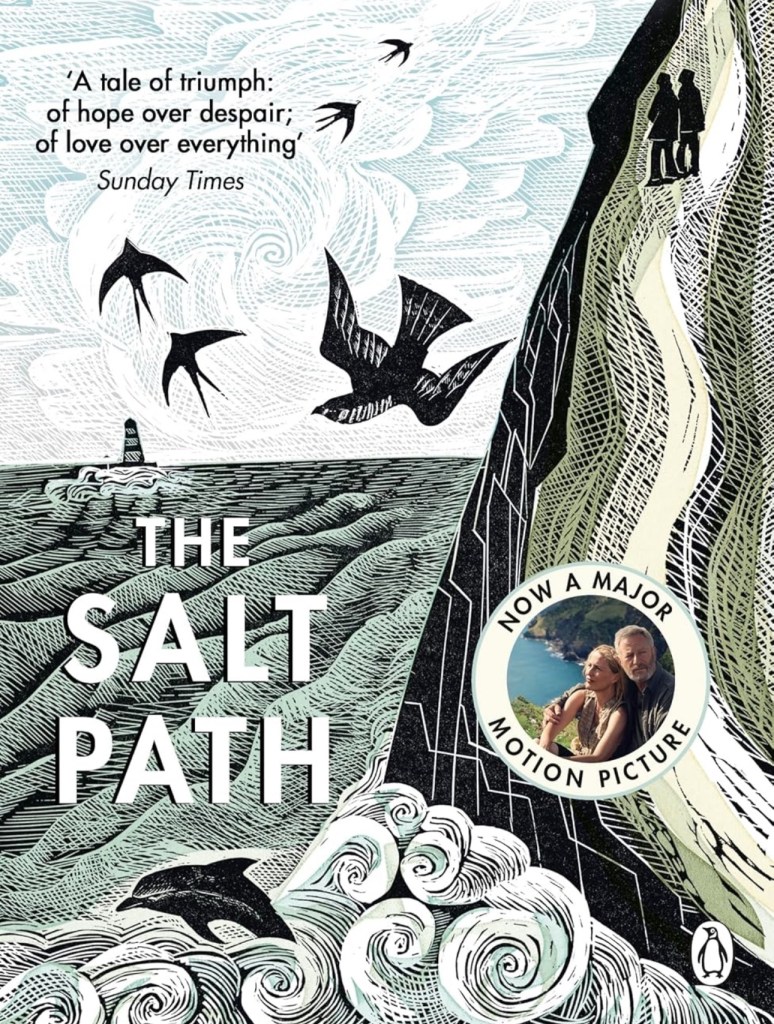
Just a year or so before I landed at Basecamp Recovery with a head full of faulty wiring and a heart heavy with trauma and uncertainty, I stumbled on a book that would deeply shape my outlook: The Salt Path. I had no idea how much this now two-million-copy story of human persistence would mean to me.
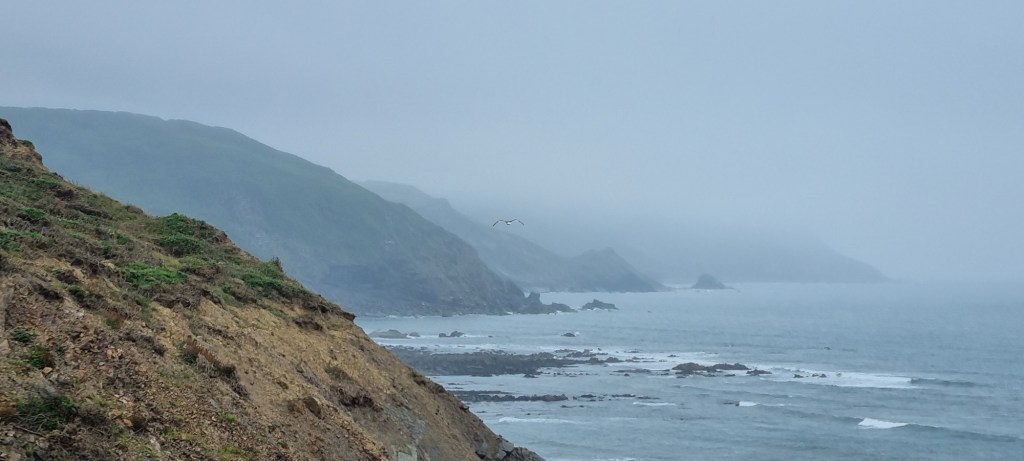
Raynor Winn’s words struck a chord. They were raw, vulnerable, yet quietly powerful. Her story prompted me to take on a coastal marathon challenge — the North Devon coast stretching into Cornwall — to mark a new decade of my life. I wanted to stick two fingers up to the jaded voice in my head whispering that age, failure, or fear would define me. It was my way of saying: I will not let uncertainty dictate my story. I will show courage in adversity and cut through the clouds.
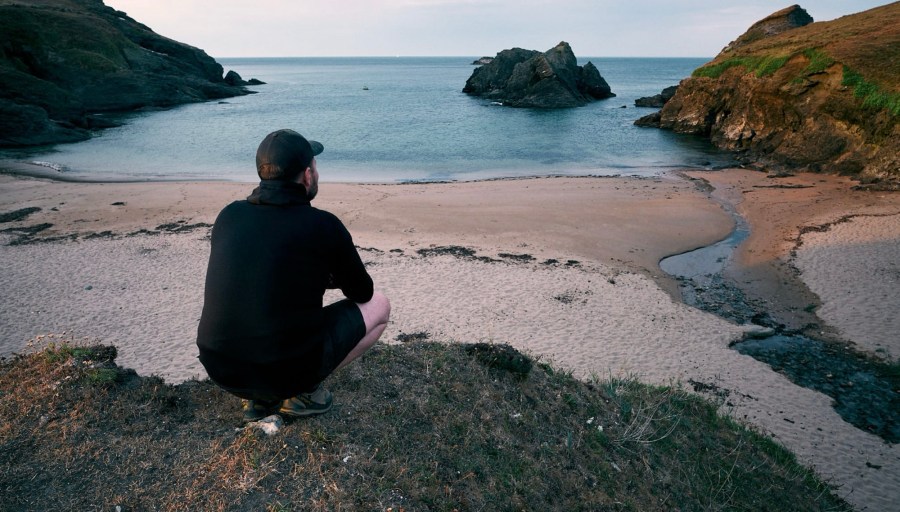
Since then, I’ve fallen in love with that stretch of coast. It’s become our place of escape — those cliffs, those endless steps, those headlands I’ve dragged myself over while my partner and our dogs crew my races from the car. It’s become more than a landscape; it’s been therapy.
As I write this, I’m partway through Landlines, Raynor’s third book, and eagerly awaiting both her fourth and the newly released film adaptation. But this week, like many others who’ve connected with her story, I was shocked to see the media storm brewing.
The Observer ran a feature that reads like a hit job. Tabloid-style character assassination. Most painfully, they questioned whether Moth’s diagnosis of CBD (Corticobasal Degeneration) was even real — a cruel, baseless suggestion that flies in the face of everything the books so compassionately express. The irony? The article’s own claims are riddled with more inconsistencies than the ones they accuse Raynor and Moth of fabricating.
Our lives are vastly different, yet I relate to their struggle — the daily grit of just getting up and carrying on when life has flattened you. I know what it’s like to live with the hangover of a former life and still try to walk forward.
Today, Raynor released a statement — composed, dignified, full of unwanted vulnerability. She shouldn’t have had to. No one should be forced to publicly defend their trauma, their partner’s illness, or the private truth behind the life they’ve bared on paper for others’ comfort and courage. And yet, here we are.
Success always invites a few spectators who show up with nothing but matches and gasoline. But I believe they’ll weather this storm — they’ve certainly weathered worse.
I highly recommend The Salt Path to anyone feeling overwhelmed or weighed down by life. It’s a story packed with empathy and resilience — a quiet anthem for those walking through their own wilderness, step by step.
 Basecamp Recovery