
Today’s reflection work hit me hard. When I think about my past attitudes—how I used to be—I feel a mix of shame and anger.
I often think of Anakin Skywalker and his fall to the dark side, summed up in one line: “From my point of view, the Jedi are evil.” It’s easy to believe a lie we tell ourselves, and the lie I used to cling to was this: I’m not getting what I need, so I’ll do whatever it takes. I played the blame game, justifying selfish behaviors.
Looking at my life now, surrounded by love and support, I feel anger—not at others, but at myself. I cast my partner as the villain in a story where I was the one twisting reality. Resentment and entitlement warped me out of my true shape.
Owning the Past Without Losing the Present
I sit with these feelings often. Learning to own my past without letting it steal the present has been a process.
When I caught up with an old friend after some time in recovery, he said, “It’s great to see you finding your narrative.” At the time, that stung. It felt like he was suggesting I was just spinning my past into a palatable story. Later, I heard Richard Osman say in a podcast that people who heckle in comedy tend to have too much “main character energy.”
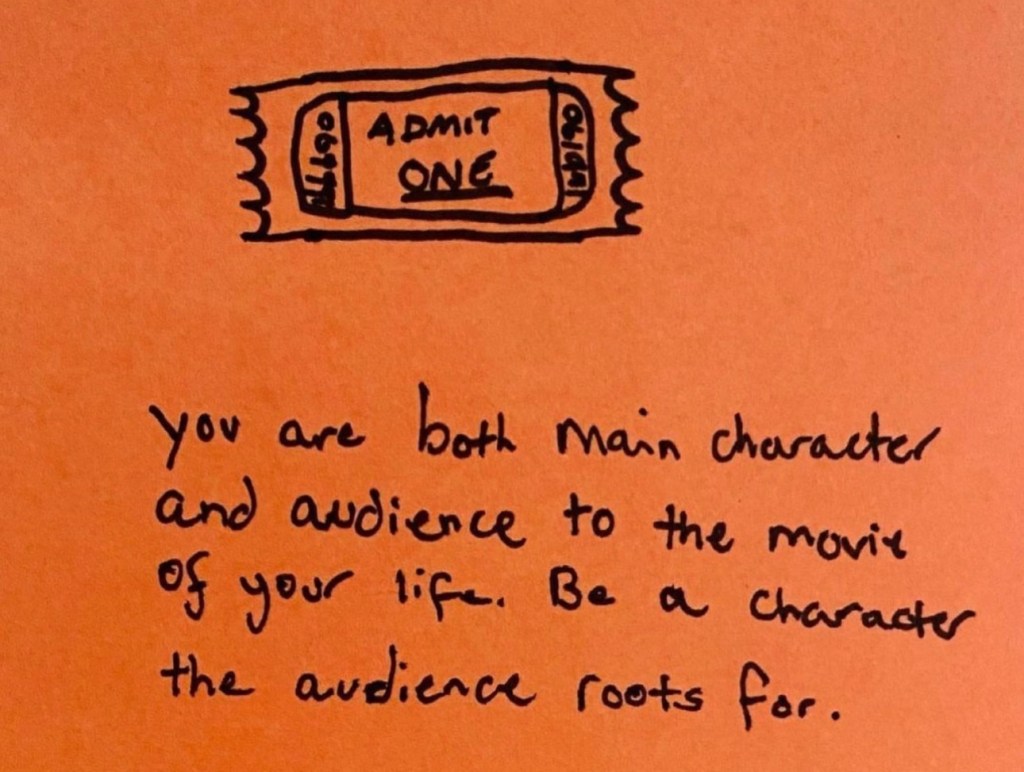
That hit home. I’ve lived much of my life like the protagonist in my own story—and sure, most of us do—but I was consumed by it. Selfish. Unwilling to reflect. I rarely considered how my actions affected others.
Recovery teaches that looking in the rearview mirror is necessary, but the real trick is balance: remembering where you’ve come from to avoid complacency, without letting the past rob you of the present or make you fearful of the future.
The Power (or Purpose) That Drives Us
In my recovery circles, I meet people from all walks of life, each with their own struggles. The Twelve Steps encourage us to find someone we relate to and consider asking them to be a sponsor. One common hesitation I hear is about the “God word” or the idea of a higher power.
There are a hundred ways to navigate this, but rather than debating the existence of God, I offer a simple reframe: substitute Power for Purpose, and you won’t go far wrong.
My past purpose was self-serving. I had bags of main character energy—and in a world full of individual-centric humans, it’s easy to hide in plain sight, fractured, flawed, and, to quote Incubus, “going nowhere really fucking fast.”
Purpose Now?
For those wary of religious language, the “God-lite” version is this: other-centered love, service, charity, and being a blessing to others. It means showing up for the people we love. Listening more than speaking. Moving from theoretical charity to real action.
So the question is, What’s driving us?
I often ask sponsees, If I cracked open your back, what kind of battery would I find? Because if we’ve ended up here, chances are we’ve been running on the wrong power source.
 Basecamp Recovery