

This reference to Sherlock Holmes is merely a coincidence; the reference actually relates to the phrase “though your sins may be as scarlet.”
This may sound like another post that leans into the Bible, but hear me out. As the Twelve Steps continue to be a pivotal part of furniture in my life, then my faith is the very foundation of how I manage life now, one day at a time.
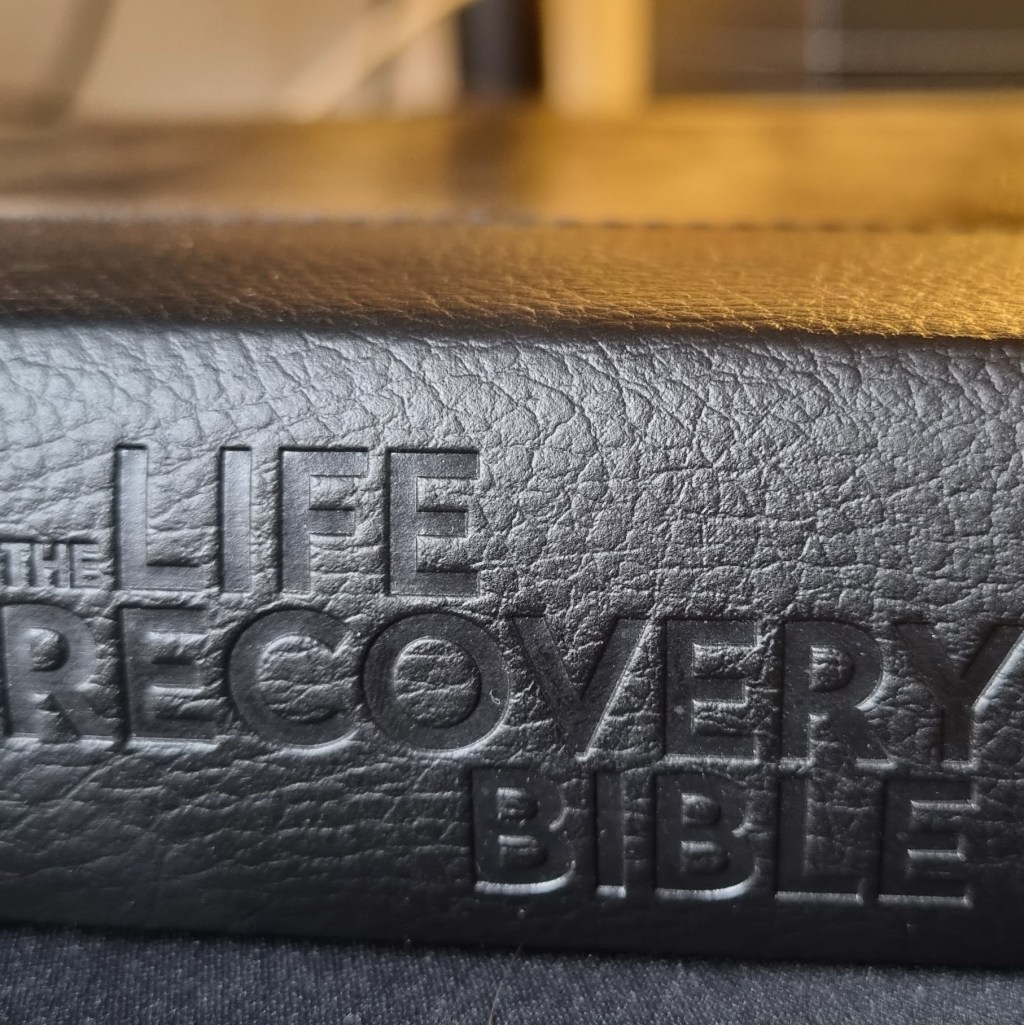
I have had my Life Recovery Bible for some time now, and only recently have I started turning to the stories of the flawed but loved folks of the Bible. I will expand on just two mini-stories here and explain how this is helping me work my Steps 9, 10, and 11.
Part One: Premeditated Acting Out.
We all know King David as the shepherd boy who defeated a giant with a slingshot. This Sunday school story continues to be the ultimate inspiration for the underdog. The rest of David’s life, like all of us, was filled with ups and downs, victories, and defeats.
If you want to read this story, you can find it in 2 Samuel 11, but I will paraphrase and emphasize here to share what’s been enlightening to me. David was the King of Israel and already had a wife. While his army was mobilized and deployed, he remained at home. He engaged in voyeurism (2 Samuel 11:2) as he noticed a woman of “unusual beauty.” Being king, he sent someone to find out who she was. This must be the biblical equivalent of a Facebook stalk.
As he established who she was, he found out she was married to one of his military men. Between the lines here, for context, he saw her bathing, and it’s understood this bathing was part of ritualistic cleansing as she was during her ceremonial “unclean” phase due to her monthly cycle. This means that David not only lusted, obsessed, and plotted, but he also had to wait to make his move to take advantage of his power, potentially for 7 days. David spiraled again and again in a haze of sexual obsession and preoccupation, with time to come to his senses but, like many of us in the throes of addiction, was unable to course correct in the isolation of “the bubble.”
When he was wrong here, he didn’t promptly admit it, but after failed attempts to cover his tracks, he had the husband posted to the frontline of the hottest area of battle where he was killed in battle. This was David doing everything he could to not get found out.
All of a sudden, this biblical story sounds familiar and almost like David, for a chapter at least, was like a sex addict, like me.
This wasn’t the moment where David was thrown into jail or canceled, and despite one of his dark moments of shame and regret, he was by no means finished in life. He was restored, and through forgiveness and amends, moved on beyond his deeds.
Part Two: Favor in the Darkest of Times.
The second story here is about Joseph. Now Joseph was sold into slavery by his brothers. He didn’t commit a crime or anything, but he was likely perceived as arrogant by his brothers who thought they would just be rid of him.
In slavery, Joseph embodied the principle of acceptance that he was in an unmanageable position and trusted God to deliver the promises despite being in a difficult position.
He found favor, and good things happened to him even in the midst of suffering. Things went from bad to worse for him when his master Potiphar’s wife tried to coerce him into a hookup. Despite his doing the right thing and declining, it didn’t stop him from being thrown into prison after an accusation was made.
Slavery, prison, and extreme controversy didn’t stop Joseph from living one day at a time, and his consistency and attitude meant that favor continued to follow him in captivity. Before long, he ascended to the throne of the land.
Now I mention this not as some sort of minimizing of bad conduct as in Joseph’s case there was none, but rather because even in hardship, struggle, consequence or “the suck,” trust in God and having the right attitude means that things can and will work out and improve. Imagine how his story would have gone if Joseph cast himself as a victim.
Here are two men involved in sexual controversy, one guilty and one innocent, one wrongly imprisoned and the other seemingly evaded attention. What’s most important here is that we cannot cover up our wrongs nor control the circumstances we are in. Also, a takeaway of great encouragement is our darkest moments don’t have to mean the end; they can be mere chapters in our story if we practice the principles and work the steps.
The Big Book of AA is the addict’s epistle, and the original Big Book (The Bible) can speak to every single one of us if we have “eyes to see and ears to hear.”
 Basecamp Recovery