
The sixth and seventh steps are often referred to as the forgotten steps. Oddly enough, I realised I hadn’t written about them; they were a while back now.
After the heavy inventory work of steps 4 and 5, we are faced with all the defects we stared down in our sixth step.
As I cast my mind back to my step 4 inventory, the emerging list of character defects painted a picture of how deeply flawed I was. If that wasn’t enough, I now had to jot them all down and start to think about what those defects of character could become if they could be converted to assets or what behaviours could replace them.
Assuming you’ve made it through the steps to this point, you have seen the emergence of a power greater than yourself at work in your day-to-day life; the God of our understanding has a recognizable signature.
My defects are flaws such as arrogance, dishonesty, selfishness, impulsiveness, stubbornness, lack of empathy, anger issues, and jealousy, among others. These defects were both products of my acting out and drivers; they are at the heart of my entire list of sexual misconduct, fears, and resentments.
My selfishness enabled years of objectification of females, which ultimately led to dehumanization, which eventually led to my chasing the dragon of content down the rabbit hole. It was no longer even about gratification but entirely in the brain, as neurological processes were triggered by harder and harder material. And that’s just the obvious surface-level destruction at play because of unchecked defects.
If every action has an opposing reaction, then this is its opposite. In recovery, I serve others instead of myself; this is the reversal of the above. It’s the return to empathy, the rehumanizing process, and it leads to caring about others more than oneself and desiring to be of use. The reward here isn’t some dopamine overdose but healing for the remorse and guilt experienced by one’s own actions.
When we put the work into this step, it isn’t just about being informed and making some resolution. Rather, we remember that we never truly depart from step one’s admission of our inability to handle these behaviours alone; we have to have a faith-based response to what is ultimately a spiritual problem.
In my steps 6 and 7, my willingness to hand things over became the way out of cycles of behaviour that have stunted me my whole life. That willingness is a choice, but it’s one that has to become muscle memory. The reason we carry on with inventory in step 10 and maintain a spiritual connection in step 11 is because we need to keep that state of being ready and willing. “I call this process living on my knees”; it’s that throwing the towel in a state of surrender.
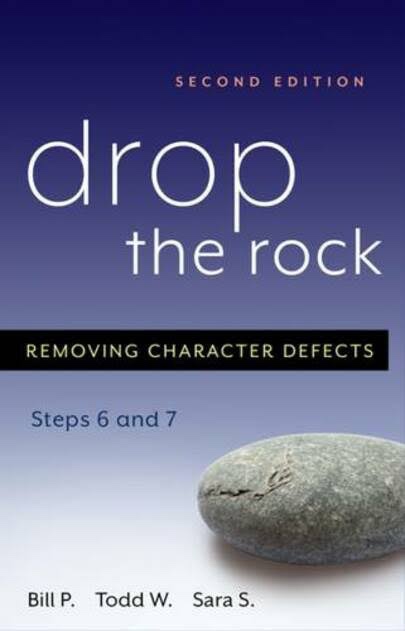
If you are working on steps 6 & 7, it’s often easy to pass them by without lingering on the lesson. The short book staple of steps 6 & 7 is “Drop the Rock.”
I keep coming back to a band in my spiritual reflections called United Pursuit, which has a song about reform, and its chorus resonates with me deeply.
“We’ve got to be willing to change, we’ve got to be willing to grow, we’ve got to be open to love in the places we didn’t expect to go.”
United Pursuit
 Basecamp Recovery